A look back at Wolsingham Steelworks
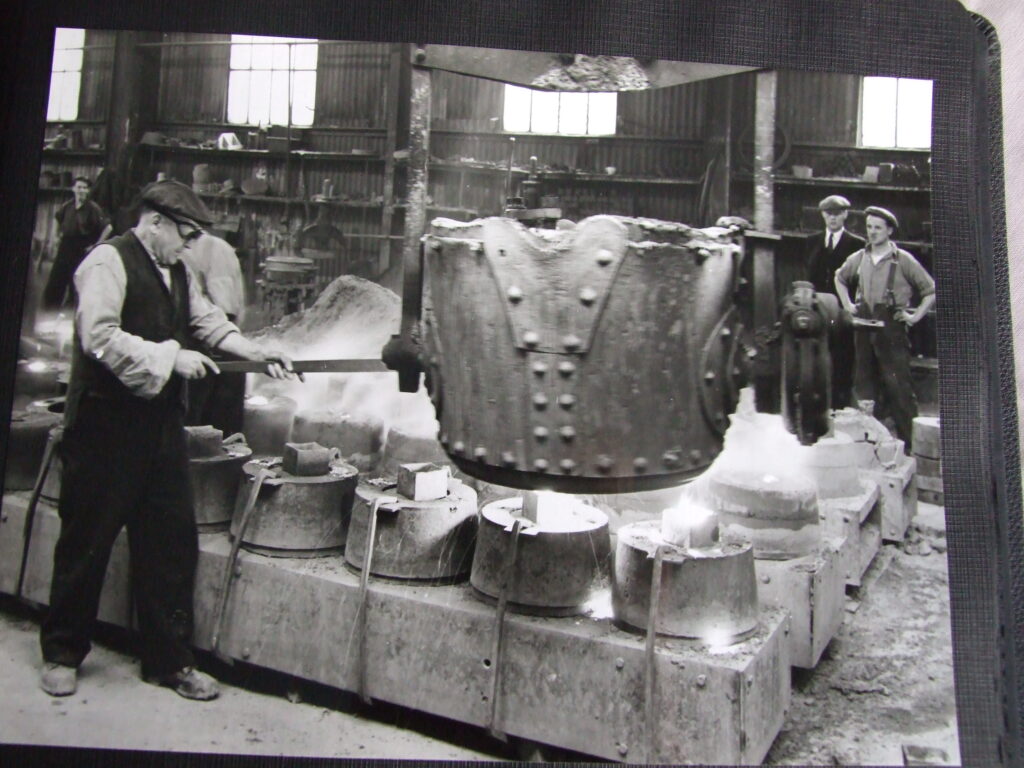
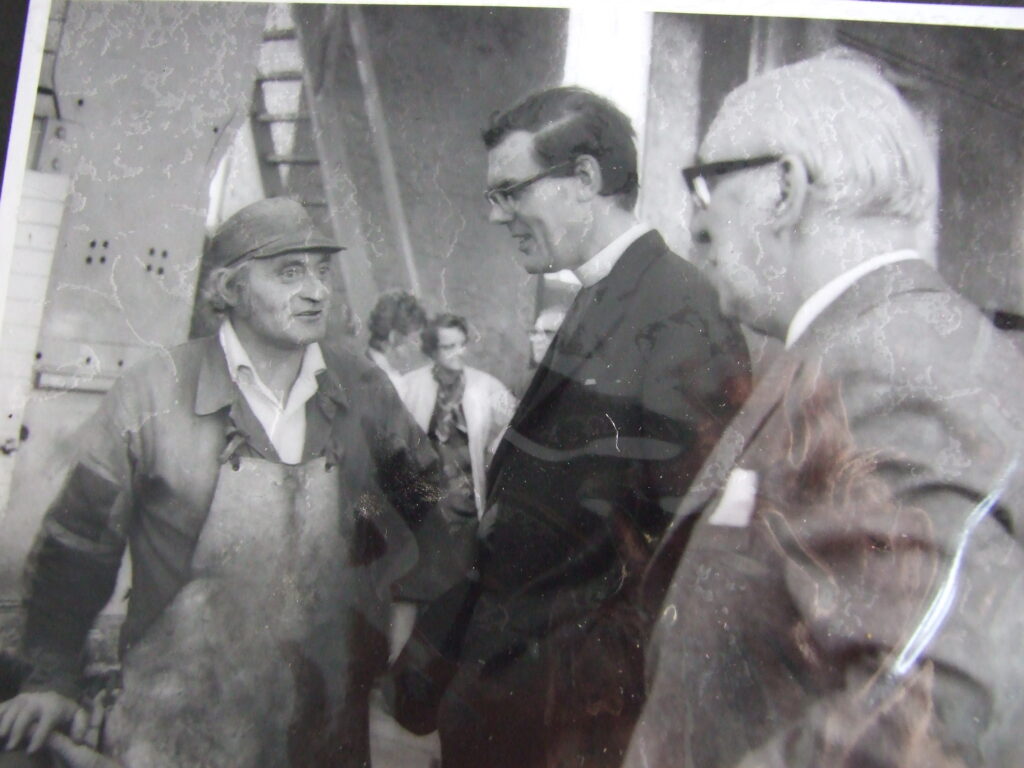
DIANE Staples, whose late father, Bryan, was a furnaceman, remembers his working days in the 60s and 70s well. “He used to wear a T shirt under a thick grey overshirt and they were always covered in small burn marks from the sparks of the molten steel,” she said. “And on wash days, my mother would take the shirts out of the washing basket to clean and they could stand up on their own through the salt he had sweated because of the heat.”
Bryan used to set off for work at 5am and in the early days, he cycled from his home at Grahamsley, near Roddymoor, to Wolsingham. Later, a van collected him and returned him home. He always had a little bait bag with a long handle hanging around his shoulder. “He took sandwiches and every night my mother would fill an old pop bottle with cold tea. He would leave the bottle out in the place where he worked and it was so hot, the tea warmed up enough to drink. He worked every day but a Saturday and went on Sunday mornings to clean the furnace, I think.”
Someone else who cycled to work six days a week was Cyril Tinkler who started as an apprentice engineer in 1945 as a 15-year-old. He lived in Crook and as his wage was just 12 shillings (60p) a week and a single bus fare 6d (2 1/2p) he had no choice but to cycle. His cycling days came to an end when one November night on his way home with workmates that included Dennis Patton from Fir Tree and Jackie Slee from Roddymoor, he was knocked down by an army wagon. “It was on the bend at Bradley Burn, there was a bridge before the road was widened. It was war-time and headlights, even those on push-bikes, had to be blacked out almost. The driver must not have seen me because he didn’t stop.”
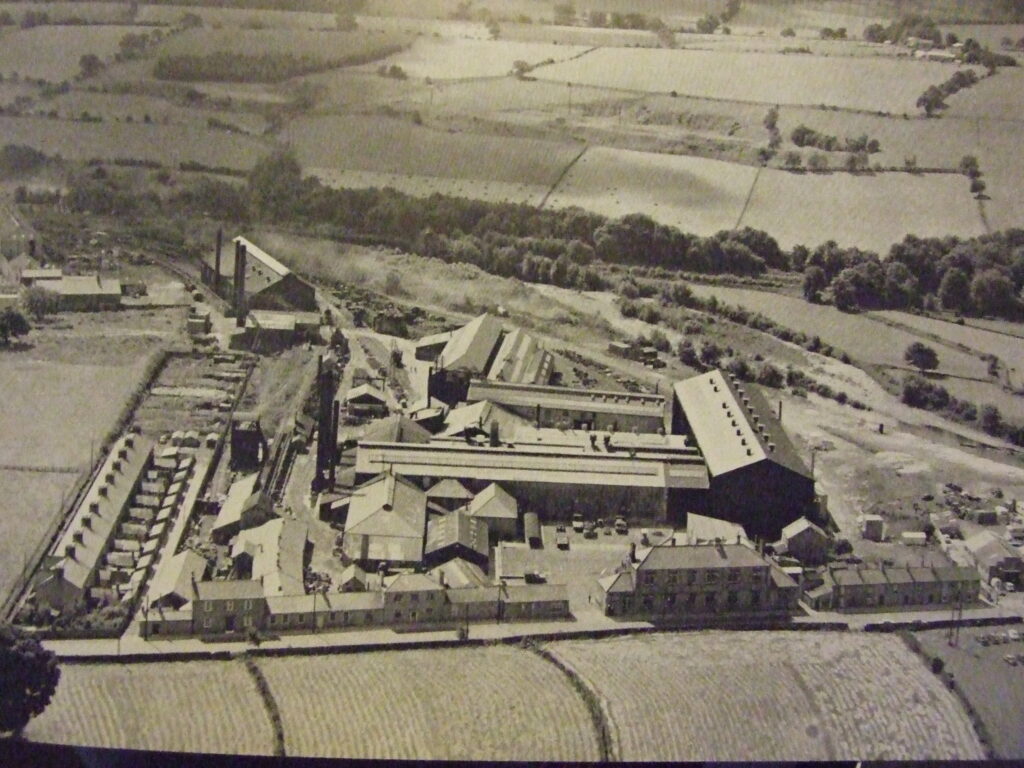
Cyril suffered a double dislocation of the arm and was in agony. The group tried to signal for help from passing motorists but they were difficult to see in the black-out until eventually a Land Army girl spotted them and transported Cyril home where he was treated by Dr Sybil Parkin. She had just been demobbed from the Royal Navy and Cyril was her first patient. She had no drugs she could administer and as the nearest hospital was Durham at that time, she took the decision to put the shoulder back in herself – more agony.
Cyril’s most enduring memory is the hour-long lunch hour. “There was nothing to do,” he said. “The canteen offered dinners for 6d but we couldn’t afford that so we brought our own bait. There was never anything much for bait at home either with rationing. We were a small family – just the three of us as I was an only child – so our egg ration was just two eggs, which went to make Yorkshire puddings. My father often went rabbitting so we always had rabbit pie and apple pudding for afters.”
After eating their bait, the young apprentices would spend the rest of the hour getting into mischief mostly. “We used to pester the girls in the convent or go down to the river where there were railway carriages hired out mostly to newly-weds. We made a nuisance of ourselves.”
He started work in the shovel shop under the eagle eye of Jack Hopper. “Jack was a talented artist and he also made coffin plates. He always wore a black cap and black goggles in the shop. “There wasn’t much light in the shop and as he sat next to the furnace that he would come in early to get going, he looked to me like Satan,” recalled Cyril. “Although he was very good to me, if I’d done well all week, he would give me half a crown, which was a lot of money then.” Cyril made shovels out of a single piece of steel. “We always made the handles first. The furnace took up one corner of the shop and it had slots in it. A man called Jimmy who lived in Durham Road was the fireman and Jimmy worked the hammer that was used to fashion the shape of the shovel.”
From the shovel shop, Cyril graduated to the test lab where he was employed turning test pieces. He described a huge machine that was used to test the strength of the pieces he made. “The man in charge was deaf but he didn’t like anyone to know so we had to pretend he wasn’t,” laughed Cyril. “There were some real characters at the works in those days.” He worked directly under George Charlton, a qualified fitter from Thornley Village who had started the steelworks after leaving Wolsingham Grammar School.
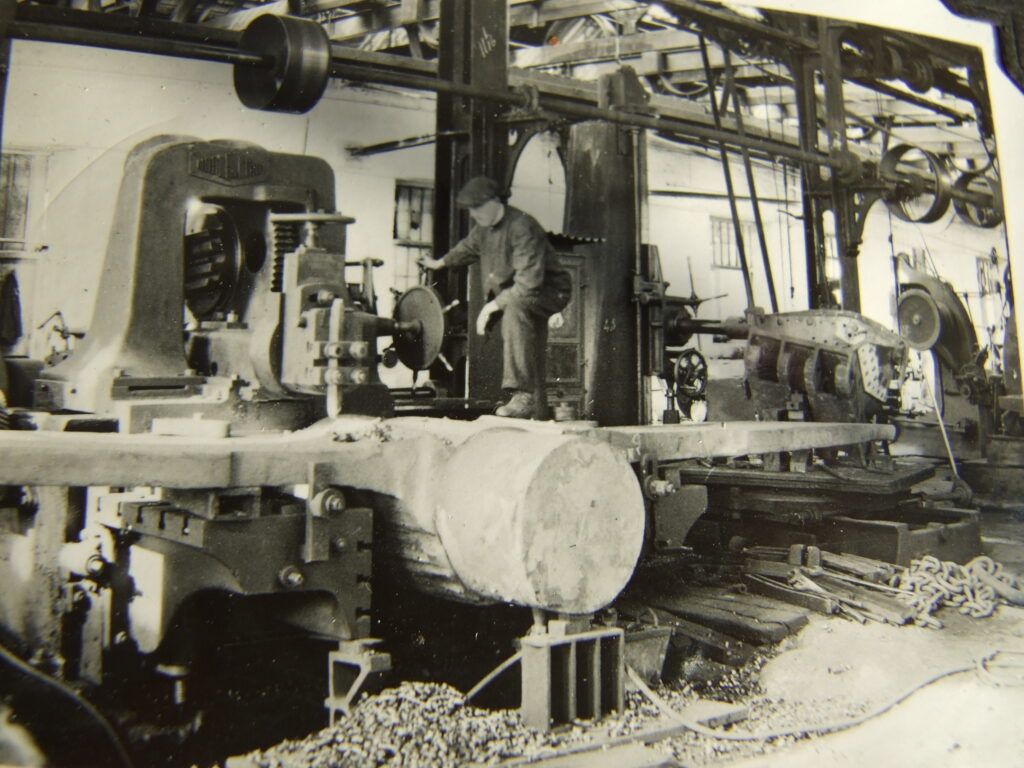
He also spent time in the gun shop and said it was so called because it had been used for turning gun barrels during the First World War. The boss was Tommy Liddle. The huge lathe needed an operator. “After every three revolutions, it had to be given one graduation on the tools,” said Cyril. Tommy shouted him over one day and said he was going to the toilet and told me to operate the graduation. I couldn’t keep track of the revs and lost count. I didn’t know how to stop it and it was in danger of cutting right through. I started to panic, I didn’t dare move away and it was so loud, I couldn’t make anyone hear me to shout for help. Then just as it was about to cut into the tools, Tommy appeared from the corner he had been hiding around. He was there all the time and told me that was my best lesson.”
“Tommy Liddle wasn’t a very big man but everyone was terrified of him. He always wore a trilby. He had an office where he could see everyone. When he popped out, apprentices were made to stand guard on the door keeping watch for his return.”
Cyril recalled that the skilled workers – the tradesmen – always wore a shirt and tie. “In later years, it became a health and safety issue and ties and suchlike were banned.” He discovered a kind of snobbery between the tradesmen and the labourers. ‘And they didn’t much like people from Crook either,” he recalled. “They sometimes said I shouldn’t be there, I should have been in the pits.”
Ironically, it is where Cyril ended up and where he finished his apprenticeship after accompanying a friend to a job interview at Roddymoor pit. “I found myself being interviewed and as it was costing me most of my wage to bus to Wolsingham and back, I took the job even though my father had spent all my life trying to keep me out of the mines.” Nevertheless, he can still remember his clock number at Wolsingham – 655.
During the war women took over many of the jobs of the men. They even worked the overhead cranes and one girl fired the furnace at one point. The first touring variety show broadcast on BBC radio was devised during the war to entertain at home and abroad. ‘Workers Playtime’ was famous for its catchphrase – broadcasting live from a canteen somewhere in Britain. It brought great excitement to Wolsingham when the steelworks canteen was chosen for a live broadcast and Wilfred Pickles turned up with a radio crew.
Kenny Lally from Wolsingham grew up with the steelworks – four generations of his family worked there and he knew Bryan Staples along with hundreds of others he worked with over the years. His grandfather, Thomas William Lally, was a shovel-maker; his father was a labourer, working on the kilns, and his son, Paul also worked there. Kenny started work three days after his 15th birthday in August 1968 along with his twin brother, Brian. They were both employed as apprentice moulders as was another brother, Peter, and their elder brother, Freddy was a crane driver. In all, he had five brothers who were all employed at the steelworks at one time or another during their working lives.
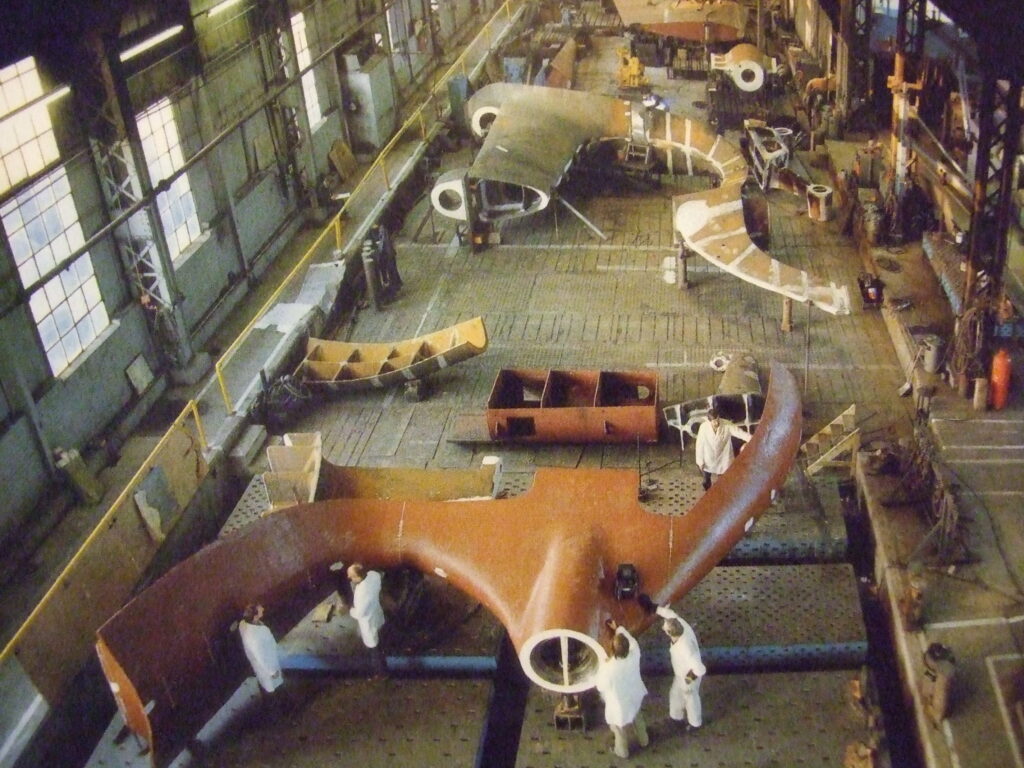
The twins made moulds for the items manufactured by the company, an extremely skilled occupation. “We made moulds for ships’ anchors, rolling stock for the railways, for Caterpillar, anything really,” he said. Kenny was a star student, winning the cast steel section of the Teesside Branch Apprentice competition, beating hundreds of other apprentices around the region. “Every foundry held competitions at the Head Wrightson foundry in Stockton. There were hundreds of castings in the competition from apprentices from all over and mine came first. It was a really big thing at the time,” remembered Kenny. It was 1972 and there was a big presentation event.” He recalls at that time, the company employed around 400 people.
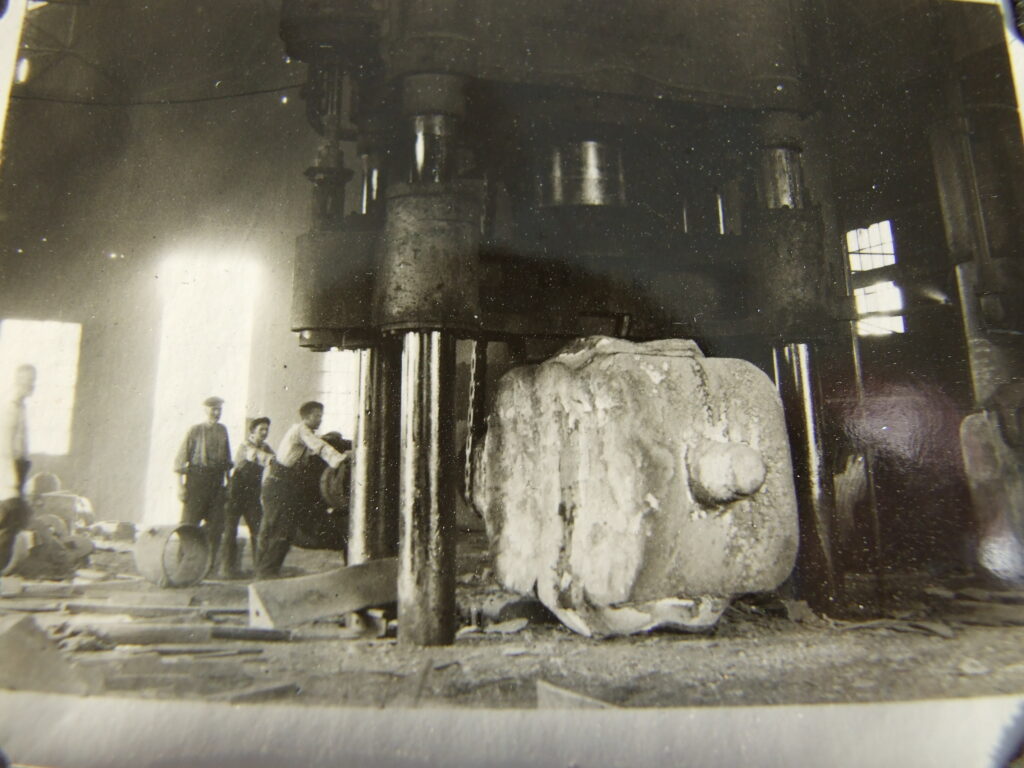
He began in the small foundry, often making his own moulders’ tools, usually in brass which he still has to this day. These included a tool called a ‘top edge’ that filled in sand on the edges of the moulds. Then there was an ‘egg sleek’ that was a round, cup-shaped tool. “You could buy them – Marriott was one of the best makers of moulders’ tools – be they were expensive.” Eventually, he ‘graduated’ to the big foundry.
The works was full of characters and one that is unforgettable for Kenny Lally was Newty Robinson, a giant of a man from Tow Law. “He was 6’5” and around 20 stones.” Obviously not someone to mess with but he took a liking to young Kenny. When there were around 50 men in a queue either waiting to clock on or be paid, Newty would grab Kenny and march him to the front so he could be seen to ahead of the rest. “He would say to me that if anyone complained to tell them to go and see him – which no one dared do.”
When security was deemed to be a problem, a security dog was employed – a German Shepherd called Elfie – and it took a dislike to Newty. “Every time Newty passed by, it went berserk,” he said. The big man devised a plan to befriend the dog and every day, he brought bones and titbits all wrapped up, which he would throw to the dog. In the end, Elfie got to like Newty, eagerly awaiting his daily ‘parcel’ until one shift, Newty sat down with his bait and opened it up only to find bones and titbits inside -he had inadvertently thrown his lunch to the dog!
Of course, there were sometimes things going on in the works that were not strictly approved by management. The Wear Valley public house, which was situated at the end of the steelworks street and which was known as ‘The Jerry’, often had night-time visitors – late-shift steelworkers. The landlord at the time was sympathetic to their plight because after all, making steel was a thirsty job. “Some of them went to The Jerry all the time,” said Kenny. “They would go along way after official closing time and sometimes even ring the landlord up at all hours and ask if they could pop along for a pint.”
One of the workers had a useful ruse – he would arrange for the landlord to leave two bottles of Double Maxim outside the pub and the employee would pick them up on his way to work, hiding them in the Wellington boots he carried with him. The bottles remained there throughout the shift, being surreptiously removed for a sly drink.
Chippy Tate was a worker renowned for his amazing appetite. He won pie-eating contests locally and once ate a whole turkey that had been cooked for the Christmas party. He had asked the manager if he could have some of the turkey for a sandwich and ate the lot – he wasn’t too popular at the time.
In 1972, management introduced ‘free issue boots’ and like the name implies, footwear was provided by the company. Tom Ridley was the Personnel Manager and it was his job to issue them before the task was allocated to Stores. One day, worker, Reggie Wayper, went to see Mr Ridley to ask for a free pair of boots. “What size?” enquired Mr Ridley. “Size 8,” replied Reggie. “We haven’t got any size 8s left,” was the answer. “Oh well, just give me two pairs of size 4s,” said Reggie.
The estate known as Lynndale was built for the workers – or at least they were given priority – and Kenny Lally and his wife, Ann, were the last couple to move in through the steelworks. Wilf Hume, former Clerk to the Weardale Rural District Council, remembers the housing estate being built in response to the lack of council housing in the town and said there may have been priority given to steelworkers. Mr Hume said that the council was so delighted with the houses, which were prefabricated buildings originally, that they honoured the builder – John Lynn – by naming the estate after him. The houses were later found to have some deficiencies and the new council – Wear Valley DC – modernised them several years later. Many are now privately owned.
Ann thought they would never get used to the loud buzzer, living so close by but Kenny had been lulled to sleep with the noise from the steelworks as a child and the buzzer soon became part of every ordinary day. “I can remember listening to the press going and the big steam hammer thumping as I lay in bed as a child,” said Kenny. “We lived in Lydgate Square and you could hear it plain as day. Those works were hot, dirty and noisy but it was what we knew, what we were brought up with. They kept our family, put bread and butter on our tables for four generations and on the tables of lots of others. It was ours.”
During the first round of redundancies in the 1982, Kenny found himself out of a job and went to work at Billy Stewart’s sawmills in the town before working for James Fletcher for a while and then on to Wilson’s Foundry. He managed to get his old job back in 1987 and although he was set on as a moulder, began to re-train as a welder in the Fettling department when work ran short. “Mr Mason used to refer to me as ‘multi-skilled’, he said. “He was a good man, Mr Mason, he respected you.” Kenny became conversant with many aspects of the steel business, especially with fabrication where he was able to operate all of the cranes.
Only a year after Kenny had been reinstated to his beloved steelworks, a tragedy happened when welder, Robert Hetherington from Low Willington was killed in accident at the site. He had just emerged from the melting shop when a suspended skip crashed to the ground in high winds and struck him. Fitters, Peter Williams from Howden-le-Wear and Kenneth Dodd from Stanhope, who were inside the skip doing maintenance work on the building were both injured. The jury at the subsequent inquest, presided over by Coroner, Colin Penna, returned a verdict of accidental death. It cast a shadow over the whole workforce for a very long time. Sadly, although Peter Williams escaped with injuries to his ribs and left arm, seven years later he too would die in another accident at the steelworks. 45-year-old Mr Williams was again carrying out maintenance work with colleague, Arthur Wilkinson, during the annual summer shutdown when the accident happened. They were carrying out the work on a travelling bogey repairing the 15-ton auxiliary hoist motor where they had to adjust the brake. They finished and decided to park the overhead travelling crane. Mr Williams was still on top of the gantry and Mr Wilkinson drove the crane down the shop. When he reached the end, he found Peter wedged between two of the electrical switch boxes – he had been crushed by the bogey and suffered an aortic rupture.
Peter Williams had been a steelman for 30 years, working at Wolsingham for 15 of those years. He was a senior employee who had been in charge of the operation that he had done many times before without mishap and the accident remained a mystery. However, Weardale Steel was fined £2000, ordered to pay Peter’s widow £3000 compensation as well as the costs of the case but no amount of money could make up for the loss of such a well-respected member of the family of steelworkers at Wolsingham.
Meanwhile, Kenny had become Shop Steward and spent some of his time ironing out problems between management and workforce. At first the union was AUEW – Amalgamated Union of Engineering Workers – but in 1985, it merged with the Manufacturing, Science and Finance Union (MSF) to form Amicus. It was a position he held for 15 years. “Everyone joined the union,” he said. “But there were no strikes in my time – no one ever benefited from striking, all it ever did was lose you money. That didn’t stop Mr Mason dreading it when he saw me approaching. I negotiated with the management quite a bit and some times, especially later on, it was very difficult taking the decisions back to the workers. Sometimes, they just didn’t believe what the bosses were saying but the truth was that the company didn’t have any money and it was on its last legs at times.”