Weardale farmer’s daughter speaks at prestigious conference
On 8th January 2025, the two most important farming conferences in the UK met for the first time at
Somerville, University of Oxford.
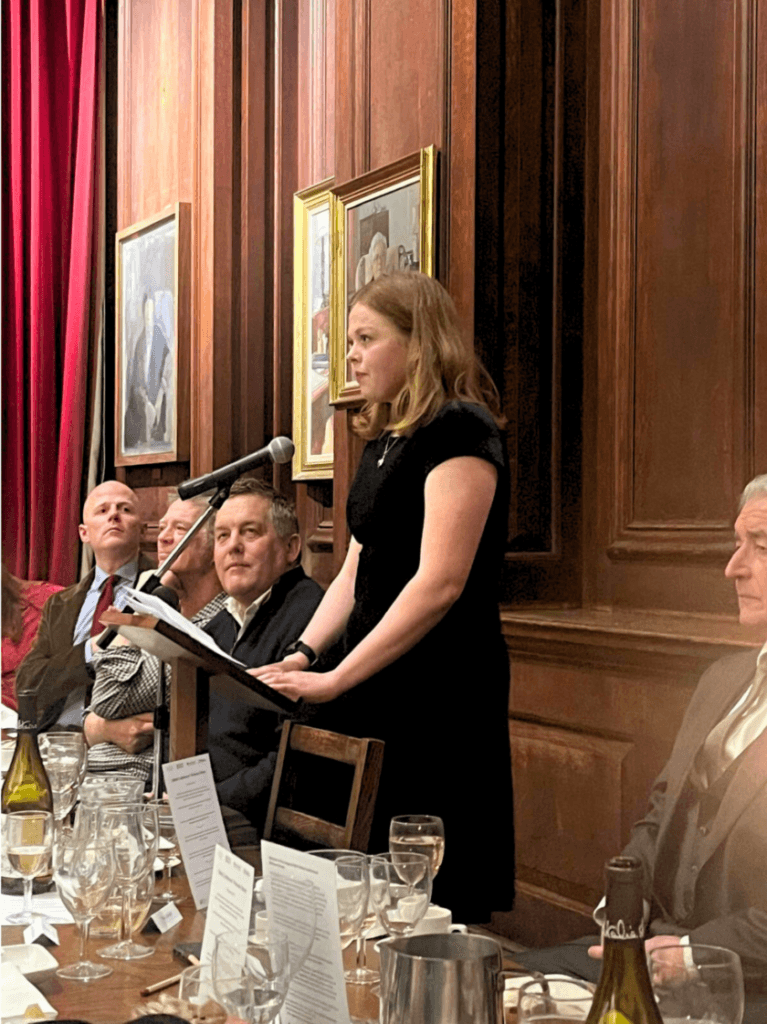
Somerville student Catherine Stephenson (2022, Biology) from Bradley Burn, the daughter of Chris
and Jill Stephenson, reflects on the significance of the occasion for an increasingly sustainable and
strategically important farming industry.
The Oxford Farming Conference has taken place in Oxford every January since 1936. It is known
for being a high-profile political occasion attended by leading figures in the agricultural sphere,
where major policies are announced. By contrast, the Oxford Real Farming Conference was
established in 2009 to provide an alternative space for hands-on discussion between practitioners
with more of a focus on sustainable farming. Despite occurring at the same time, in the same city,
there seemed little chance the different worlds of the two conferences would ever meet.
But the farming industry is changing. Post-Brexit, the move away from a subsidy-model has
created a new focus on supporting farmers in delivering environmental services. As a result, the
entire industry is becoming more environmentally focused. At the same time, the soaring £268
billion cost of our current food system thanks to processed food’s adverse health effects and fresh
food’s high production tariffs, is adding momentum to calls for a greater role and status for British
farming.
In January 2025, Somerville College witnessed this new era in action as the two delegations met
for the first time at a shared dinner to celebrate the opening of their respective conferences.
Somerville was asked to host this historic event in recognition of our College’s commitment to
sustainable agriculture through the OpenAg Symposium, which occurs annually at Somerville,
organised by the Oxford India Centre for Sustainable Development.
At the dinner, high-profile figures from both conferences came together to promote collaboration
and dialogue. A dinner, expertly prepared by the Somerville catering team with food provided by the
farmers, reminded everyone how a good meal can bring people together. After dinner, guests heard
from Tony Juniper, Chair of Natural England, James Rebanks, the celebrated author and farmer, and
our very own Catherine Stephenson, a third-year Biologist. Complementing the viewpoints of
policymaker and practitioner, Catherine told guests what the next generation wants and needs from
farming.
A transcript of Catherine’s speech, whose family has farmed Bradley Hall farm for generations, is
given below.
Catherine Stephenson (2022, Biology): “What does my generation need to make farming for food,
nature and climate both feasible and rewarding?”
“Farming was always an all-consuming lifestyle. But farmers today must additionally endure low
prices, face rising input costs and strive to balance the impacts of climate change whilse trying to
farm and protect nature. We face governmental inconsistency and ignorance, inheritance
challenges, unexpected subsidy cuts, detrimental trade deals and mounting stress.
So why do we bother?
Because we can work in incredible landscapes with inspiring people, and we are outside in nature
every day. We have rich social heritage, culture and tradition. Seeing hard work pay off is hugely
satisfying. We get to work with family and have freedom growing up whilst learning the value of
hard work. We get to work with animals and produce natural food. Funny moments can make the
antics of Shaun the Sheep feel a little too relatable.
We bother because we are stubborn, resilient and proud of what we do.
But while these factors may be rewarding, they don’t make the industry viable.
I thought the best way to find out what my generation needs was to ask them, although with
hindsight I probably shouldn’t have attempted this at the Durham Young Farmers’ Christmas party. I
didn’t get many coherent answers…
But the overarching thing that people told me was that we need to be able to make a profit doing
what we do. What needs to change for that to happen? Well, three themes came through:
Consistency, understanding and diversity: these qualities will be vital both for engaging existing farm
kids and attracting new entrants.
So first, consistency: When I asked a neighbour, William, he said that we need: “well thought-out
government policy that does not kill confidence or stifle innovation.” For any business to be
successful, having the ability and the confidence to plan long-term is essential. Not only 1 year, 5
years or 10 years ahead, but through the length of a career. So far, in my short life, we’ve had 14
DEFRA ministers, 6 of whom have been in the 5 years since Brexit. This has led to 6 changes of policy
direction since we allegedly ‘took back control’. So, for example, that lack of consistency will sadly
impact our nature recovery goals, as farmers will have no option except to prioritise producing as
much food as possible rather than bankrolling environmental work.
It’s viability or nothing.
Secondly, understanding:
Whilst I love Shaun the Sheep, the cute, idyllic picture it paints doesn’t reflect the graft that is
farming. A farm comes before everything. This is perhaps difficult to appreciate for anyone not living
in that environment every day. My brother James says he wants “farmers to be better understood
and respected”. He means that both culturally and economically. We need a willingness to
understand farming. Farming in its entirety. And, primarily, people need to understand that farmers
are food producers. We feed the nation, and, in doing so, we can conserve and restore the natural
landscape.
But we farm kids also need to embrace different perspectives within the industry to become better
farmers going forward.
Thirdly, diversity:
There are many perspectives in the industry. No two farms operate the same way. But validating
more voices seems really important. Sitting here tonight, surrounded by portraits of so many
inspiring women, it is heartening that women’s voices in farming are increasingly heard.
As a biology student, I’d say that diversity is really everything: diversity of life is about the diversity in
the soil, and everything stems from that. Our farm motto is “healthy soil, happy cattle”.
So, consistency, understanding and diversity. My farming generation cares and wants to carry on
farming, earning a living without hindrance. It shouldn’t be necessary to diversify away from
farming; and not everyone has that option.
Hopefully, each of us has half a century ahead of us to contribute well, producing nutritious food,
and sustaining the land so that we can carry on farming it indefinitely.
If farming becomes truly valued in its own right, this ambition will come to fruition.”
Catherine wishes to thank Julia Aglonby, the Food, Farming and Countryside Commission, Pasture for
Life, the Foundation for Common Land and Hodmedod for facilitating an amazing night. Hopefully,
this was the first of many such meetings to come…