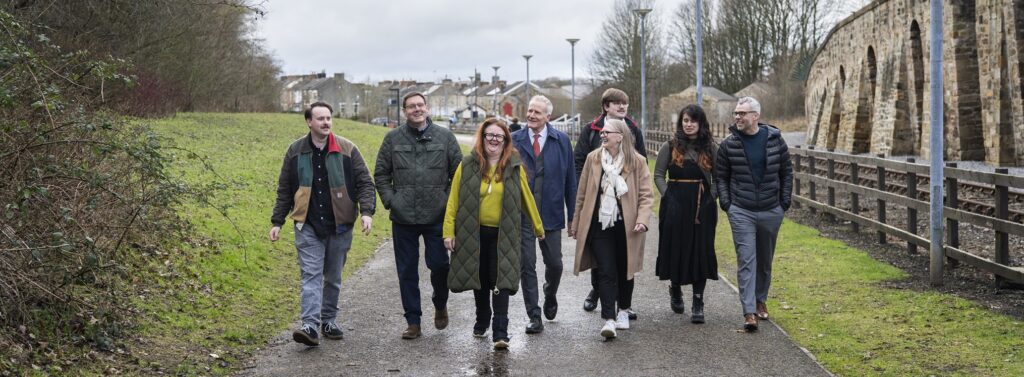
From left, Jack Fahey, senior creative producer at TUCan Studio; Bryan Harris, senior conservation officer at Durham County Council; Niccy Hallifax, director of S&DR200; Reuben Kench, Chair of the Stockton and Darlington Railway Heritage Partnership; Sarah Price, head of Locomotion; Paul Shail, lead developer at TUCan Studio; Jazmine Vassie, lead artist at TUCan Studio; and Richie Starrs, S&DR200 project manager on the Trail of Discovery, near Locomotion in Shildon.
S&DR200 festival has announced the official opening of the Trail of Discovery, a new public walking and cycling route that follows sections of the original 26-mile journey of the world’s first passenger railway—the Stockton & Darlington Railway (S&DR), complete with an interactive game.
The Trail of Discovery connects key heritage sites between Witton Park in County Durham and Stockton-on-Tees, including Shildon, Darlington, Heighington, and Eaglescliffe. Interpretation panels, lineside signs, and public artworks, including nine murals, guide visitors along the route, revealing the rich history of the railway that changed the world.
It will be a key part of the legacy of the S&DR200 Festival – a nine-month festival being delivered by Darlington Borough Council, Durham County Council and Stockton-on-Tees Borough Council to celebrate the 200th anniversary of S&DR.
The Trail of Discovery web app and interactive game, voiced by broadcaster Steph McGovern, uses augmented reality to bring the route to life. Created by Teesside University’s TUCan Studio, it allows visitors to unlock stories, podcasts, and digital experiences at key locations, building their own virtual cavalcade and deepening their understanding of the S&DR’s legacy.
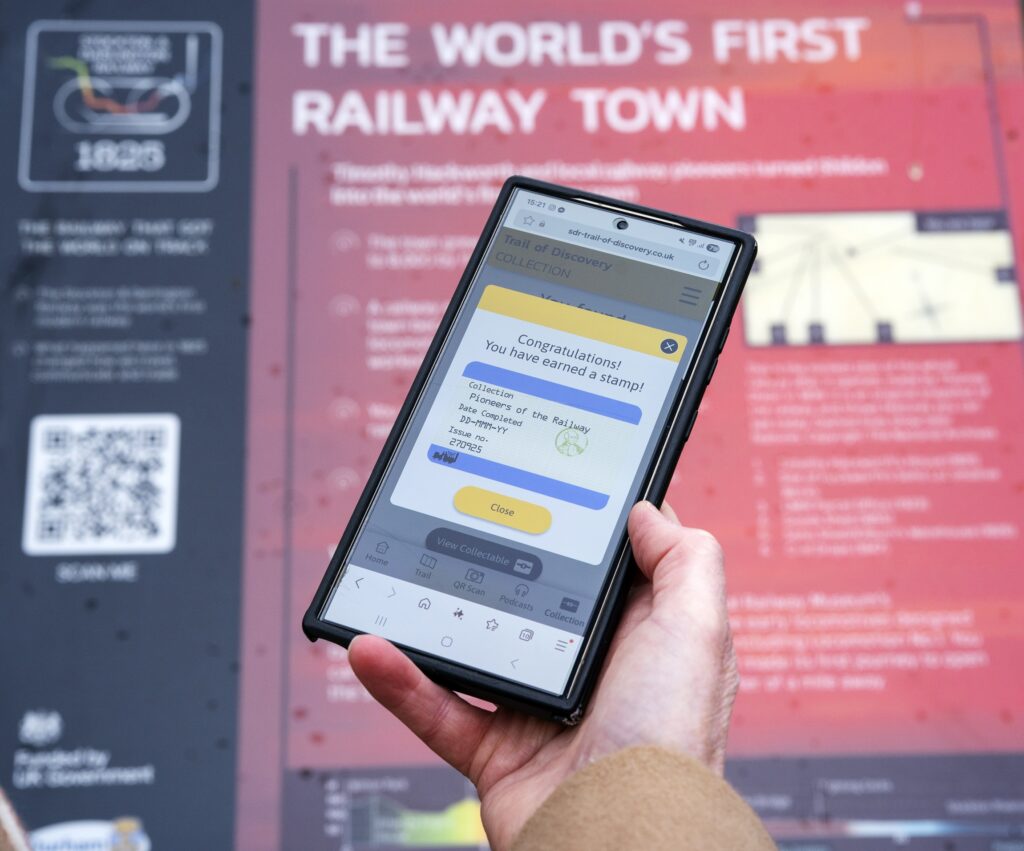
The new web app and interactive game can be used on the trail or remotely, allowing people to unlock stories, podcasts, and digital experiences.
In addition, the S&DR Active Travel Route, developed by Durham County Council, forms part of the wider Trail of Discovery. Funded through the Levelling Up Fund, the route encourages active travel while immersing visitors in railway heritage. It passes through historically significant locations such as the Etherley Incline and the Masons Arms Crossing, with interpretation panels enhancing the experience.
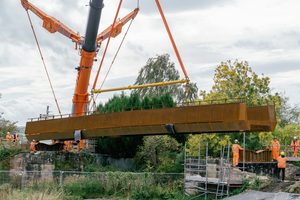
Further additions to the trail are continuing this year, including the opening of a new bridge over the River Gaunless in the same location of the original S&DR bridge.
Festival Director Niccy Hallifax said: “The Trail of Discovery is a cornerstone of the S&DR200 celebrations. It’s not just a route—it’s a journey through time, innovation, and community. The web app adds a new layer of engagement, making history accessible and immersive for all. Created by TUCan, which is part of the University of Teesside, it’s a live project that can be followed on the route itself or remotely and will benefit our communities for generations to come.”
Steph McGovern said: “As someone who grew up in the North East, and started my career in engineering, I am incredibly proud of the part our region played in the development of the modern railway. It was a real treat to voice the Trail of Discovery game, which I hope will encourage even more people to connect with our fascinating heritage.”
Reuben Kench, Chair of the Stockton and Darlington Railway Heritage Partnership, said: “The Trail of Discovery and web app are fantastic examples of heritage, technology, and storytelling coming together to create a lasting legacy for the region. They really epitomise what S&DR200 is all about; drawing inspiration from our rich history of innovation to create new opportunities and enriching experiences.”
The Trail of Discovery offers a multi-layered journey through the birthplace of the modern railway and links directly to key museums, including:
- Locomotion is located at the western end of the trail in Shildon—where Locomotion No. 1 began its historic journey in 1825—Locomotion sits on the original S&DR line and is a key anchor point for the Trail of Discovery. Visitors can explore the museum before continuing eastward along the trail, with nearby access to the Brusselton Incline and Masons Arms, both significant early railway sites.
- Hopetown in Darlington is situated directly on the 1825 route, Hopetown is a central stop on the Trail of Discovery. It connects visitors to North Road Station, Skerne Bridge, and other Darlington landmarks. The museum’s interactive exhibits and restored railway buildings offer a deep dive into the region’s railway heritage, making it a pivotal point for trail users exploring Darlington’s role in railway history.
- Preston Park in Stockton-on-Tees is at the eastern end of the trail. The Discovery Trail’s final leg takes in Eaglescliffe Station before heading to Preston Park where sections of the original S&DR track bed can be found before going onto St John’s Crossing on Stockton’s Riverside. Following a multi-million pound extension and investment into wider park improvements, Preston Park has been showcasing a range of exhibitions in the museum’s new exhibition space, called Tracks of Change, all looking at the stories of the railways. Perfume, a new installation by contemporary visual artist Yann Nguema, is the final exhibition in the series and is on display until Sunday 10 May.
To view the latest S&DR200 programme listings, visit www.sdr200.co.uk.
For more information about the S&DR Trail of Discovery, visit www.sdr200.co.uk/discovery-trail.
S&DR200 is funded by Darlington Borough Council, Durham County Council and Stockton-on-Tees Borough Council. Other major funders include Arts Council England, Tees Valley Combined Authority, North East Combined Authority, and The National Heritage Lottery Fund. Other sponsors are LNER, Hitachi Amazon UK, Caswell’s, and Hampton Hilton.
From 2018 to 2023, the Stockton & Darlington railway was part of Historic England’s Heritage Action Zone programme. The scheme aimed to rejuvenate and restore the historic birthplace of the modern railway system, developing its potential to deliver economic growth, social regeneration and environmental benefits, as well as securing the line’s long-term management as a world-class visitor attraction.