By Rev Ray Anglesea
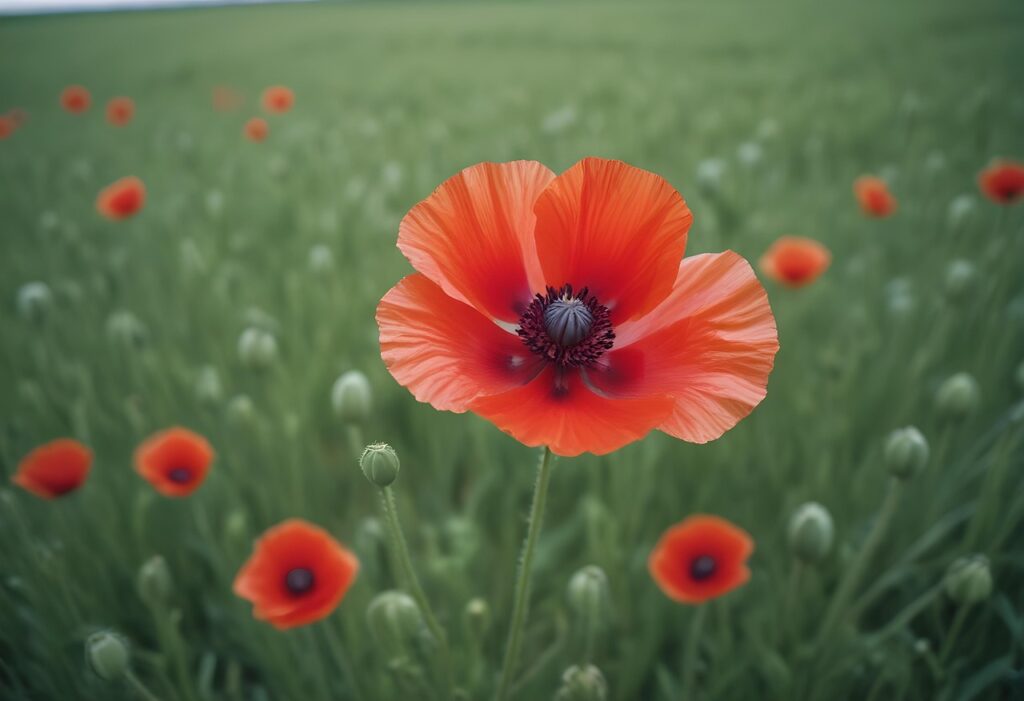
Tomorrow, as every year on this Sunday closest to 11th November, we gather in solemn remembrance. We pause, along with the whole nation, to honour those who gave their lives in the service of others — in the trenches of the First World War, on the beaches of Normandy, in the skies over Britain, in the second world war and in conflicts nearer to our own time.
We remember with reverence the sacrifice of the armed forces, the courage of ordinary people in extraordinary circumstances, and the cost of war that continues long after the guns fall silent.
This year King Charles III led a national Service of Remembrance at the National Memorial Arboretum to commemorate the 80th anniversary of VJ Day. The service, hosted by the Royal British Legion, honoured those who served in the Far East during the Second World War, culminating in a two-minute silence of remembrance at midday. A floral tribute was created this year at the Gilesgate Roundabout in Durham with colourful plants to mark that same VJ Day anniversary.
A couple of weeks ago whilst visiting the new Keel Crossing footbridge in Sunderland, I had the opportunity of visiting The Church of the Holy Trinity in Old Sunderland where the church continues to commemorate every year Trafalgar Day, the Battle of which took place on 21 October 1805. Though that battle was a moment of great victory, it came at a heavy cost. Across Britain, port towns like Sunderland felt the impact deeply, as local sailors served and died in the engagement. Memorials such as the one in Trafalgar Square, in Old Sunderland, was built as part of a small square of houses originally meant for the widows and families of those lost in the Battle of Trafalgar. It’s a remarkable example of how local industry and shipbuilding towns like Sunderland contributed to and remembered national history.
Now after 220 years since the Battle of Trafalgar, some 107 years after the armistice of 1918, 80 years after the end of the Second World War – and this year’s memorials unveiled at the National Memorial Arboretum we have continued to commemorate the terrible loss of life suffered by British soldiers, sailors and airmen, commemorations that have shaped who we are as a nation and people.
But as we gather this year, in 2025, Remembrance takes on an even heavier weight. Around the world, war and violence are no longer memories. They are headlines. Realities. Not distant stories, but present-day sufferings — in Europe, in the Middle East, in Africa, and beyond. Families are grieving. Cities are in rubble. Children are growing up not knowing peace. And so today we not only remember the past, but we also reckon with the present. And we ask — what does it mean, as Christians, to remember well? And how can we live as people of peace in a world still torn by war?
We remember the cost of war not with romanticism, but with sober truth. The silence we observe just now is not empty — it is full. Full of names and faces. Full of pain and pride. Full of lives interrupted.
As one who has not known the realities of war, I always feel uncomfortable standing here. I was born in the shadow of silence — that odd, uneasy calm that followed the war to end all wars, though of course, it wasn’t. In 1946, the world was exhausted. Cities smouldered in rubble and hearts tried to forget what they had seen. I was too young to remember it, yet somehow, the war lived in the walls of our home, in the eyes of my parents, in the absence of the uncles I never met. The post-war years were painted as a dawn — full of optimism, rebuilding, and resolve. That’s most probably why I took to Town Planning as a career. Ration books were retired, factories whirred into peacetime industry, and the world dared to hope again. Yet even as new homes were built and post war babies and children like me were born into fresh beginnings, conflict smouldered in other corners of the globe — Korea, Vietnam, the Falklands, the Gulf, Bosnia, Afghanistan, Ukraine… and now, God help us, Gaza.
Decade by decade, I’ve watched the cycle turn. The vocabulary changes, the maps shift, the enemies wear different uniforms, but the cost — the human cost — is always the same. Faces young and hopeful turned to dust. Civilians caught in the crossfire of politics and power. Refugees with eyes too old for their years.
And now, I find myself older than most of the men buried in those fields of war graves. I’ve lived the life they never got — birthdays, grandchildren, holidays. And I wonder: have we honoured them truly, or merely mourned them with ceremony? Did we learn what they died to teach us?
Alas, war is no longer declared with fanfare. It creeps in with drones and data, misinformation and proxy battles. But the graves still fill, the memorials still grow. And I, a child of peace, born of a wounded world’s fragile hope, walk among the stones and wonder how many more names will be carved before we understand the value of life over land, of humanity over history. Perhaps the greatest memorial we could build is not of granite or marble, but a world where the silence after war is never broken by another.
The prophet Isaiah speaks of a time when nations “will beat their swords into ploughshares, and their spears into pruning hooks.” But that time is not yet fully realised. And so, we remember — that even as we long for peace, humanity still repeats the cycle of violence.
Yet, this terror of violence also fuels our hope. Because if we face the truth of war, we can also face the truth of what peace demands: courage, compassion, and conviction.
In our Gospel reading, Jesus says: “Greater love has no one than this, than to lay down one’s life for one’s friends.”
These words echo across the gravestones of war cemeteries. They remind us that those who served like my esteemed father in the middle east, who sacrificed, gave of themselves for others. That is love in action — not sentiment, but selflessness.
But we must not only admire their example; we are called to imitate it.
Christianity is a religion in which remembering is extraordinarily central and important. Not for a mere 220 years after the Battle of Trafalgar, 107 years since the Armistice, 80 years after the end of VJ day, but for 2000 years, Christians have devoted themselves to remembering one life and death as not only especially grievable, but as especially significant. The Gospels remember Christ’s life. The creeds remember his conception, birth, suffering, death and burial. And the central service of many denominations – variously called the Mass, Eucharist, Holy Communion or Lord’s supper – not only includes the memories contained in Gospel and Creed but is structured as an enactment of Christ’s own recollection of his life and death. ‘Do this in remembrance of me’. By remembering Him, Jesus wasn’t glorifying death — he was modelling a life of sacrificial love. A love that puts others first. A love that walks the way of peace, even when it is costly. In a world that rewards vengeance, Jesus calls us to forgiveness. In a world that applauds power, Jesus shows us humility. In a world at war, Jesus speaks of peace — and not just peace as the absence of conflict, but peace as the presence of justice, dignity, and reconciliation.
This Remembrance Sunday, we cannot simply look backward. We must also look forward. The call to “never forget” is not just about history — it’s about responsibility. What kind of future are we shaping? What kind of peace are we building?
For some, that may mean supporting veterans, refugees, or those living with the scars of war, with our Ukrainian friends and family who have made their home with us. For others, it may mean working for reconciliation in divided communities — or even within our own families. And for all of us, it means being peacemakers in a world that desperately needs them. Peace making isn’t weakness. It is the strong, stubborn work of grace. It is choosing dialogue over division. Mercy over revenge. Understanding over fear.
As followers of the Prince of Peace, we are called to be signs of a better kingdom — one where swords truly are turned into ploughshares, and where peace is not just prayed for, but practiced.
What I have come to realise is that in all this mess of war, there is the non-negotiable God-given dignity and preciousness of every human life, which manifests itself in the beauties and strength of friendship and love, in my children, grandchildren, God-children, in you college guys from across the road, to you is given the courage of working for what is just and fair: and it is these attributes that shines through and what we celebrate and give thanks for today.
So today, we remember. We remember the fallen — with reverence. We remember the way of Christ — with hope. And we commit ourselves to being people who do not simply long for peace, but who live it. Speak it. Make it.
May the God who remembers every name, every story, every sacrifice — lead us in the paths of peace.
Amen.
Isaiah 2:1-5; John 15:12-17