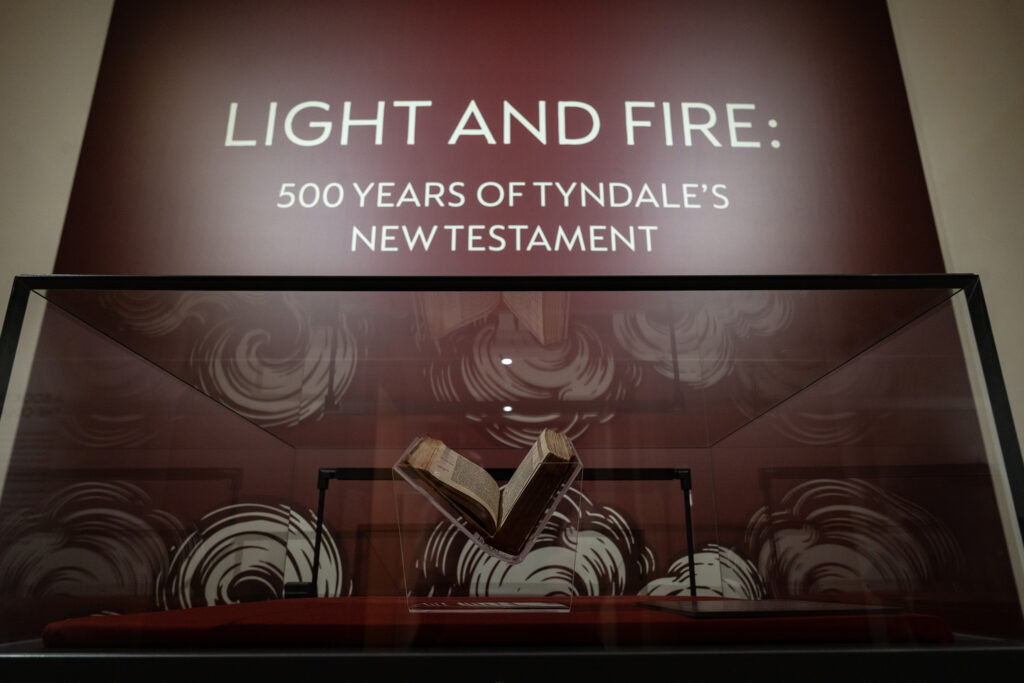
A rare edition of the book that helped change the course of English history will be displayed in Bishop Auckland as part of a special exhibition marking 500 years since William Tyndale’s groundbreaking English translation of the New Testament.
Running from 15 July to 31 December 2026 at the Faith Museum, Light and Fire: 500 Years of Tyndale’s New Testament will explore the story of the man who risked everything – even his own life – for his belief that everyone should be able to read the Bible in their own language. Described as the most important book ever published in English, Tyndale’s New Testament left a lasting impact on our culture and our language.
In defiance of the King and the Church, he translated the Bible into English from the original Hebrew and Greek. To have it published, Tyndale had to go into hiding abroad.
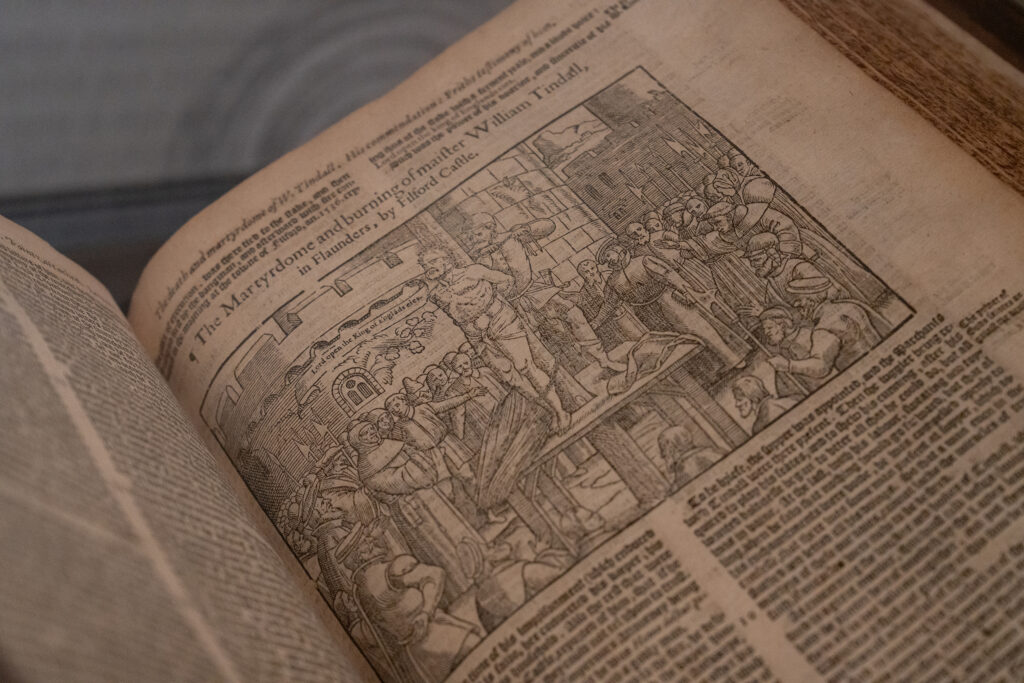
Tyndale’s translation was considered so dangerous that church leaders banned it. Copies had to be smuggled into England and hidden in sacks of cloth. Bishop of London Cuthbert Tunstall, who later became Bishop of Durham, burned copies outside St Paul’s Cathedral in 1526. Tyndale was eventually strangled and burned at the stake for his beliefs, but his influence endured.
Despite the best efforts of the authorities to destroy all copies of Tyndale’s translation in existence, a small number survived, with one of only a handful of known examples of the 1536 New Testament in the world being displayed. The Faith Museum will be the only venue in the North East where visitors can view an edition of Tyndale’s New Testament produced during his lifetime in this anniversary year.
Tyndale’s influence extended far beyond religion. His vivid, accessible translation helped shape the English language itself, introducing words and phrases that remain part of everyday speech 500 years later. Expressions including “the apple of his eye”, “eat, drink and be merry”, “the signs of the times”, “let there be light”, and “give up the ghost” all entered common use through his pioneering work, leaving a linguistic legacy that continues to resonate today.
The exhibition will also feature a collection of rare sixteenth-century Bibles, showing how Tyndale’s forbidden translation was gradually accepted in England as people came to access the Word of God in their own language.
Dr Lydia Prosser, Curator at The Auckland Project, said: “This is a unique opportunity for visitors to see a rare edition of a book that changed the course of history. We’re excited to showcase our copy of Tyndale’s New Testament in an exhibition that presents the turbulent context in which it was produced and explores its continued relevance 500 years later.”
Clare Baron, Head of Curatorial at The Auckland Project, said: “Reading the Bible in our own language may seem normal today, but 500 years ago the situation was very different. In Western Europe the Bible was only widely available in Latin, unintelligible to many. Translations were banned in England. But William Tyndale believed that Christians should have direct access the word of God in the Bible, writing that the Church restricted its translation in order ‘to keep the world still in darkness’. With the publication of this small book, Tyndale helped to pave the way for the Reformation in England.”
Designed by Níall McLaughlin, The Faith Museum – an Arts Council England Accredited Museum – opened to the public in October 2023 and is part of The Auckland Project’s collection of attractions, which have also been recognised for their architectural achievements by the Royal Institute of British Architects (RIBA) last year, when it was also awarded ‘Grand Winner’ in the Royal Fine Art Commission Trust’s 2024 Building Beauty Awards.
The museum explores the impact of faith on British society over the past 6,000 years. It features over 250 objects from various collections, including rarely seen items and contemporary commissions, to illustrate how faith has shaped lives and communities throughout history.
For more information about the exhibition and associated events, visit The Auckland Project website: https://aucklandproject.org/ to plan your visit.