EASTGATE LITHIUM PLANT APPROVED BY COUNCILLORS
THE Development of a pilot Lithium processing plant using groundwater abstracted from existing
ground water wells and associated infrastructure has been approved by Durham County Councillors.
Weardale Lithium Limited, based on the site of Former Weardale Works and Quarry, Eastgate has
had its planning application approved.
The 6.96 Hectare (ha) application site is located to the south west of Eastgate with the
application site comprising land situated both north and south of the River Wear. The greater part of
the site is located to the north of the River Wear, and to the south of the Road A689 from which
access is gained to this part of the site. This part of the site is elevated above the River Wear and
comprises the western part of the former Eastgate Cement Works and access to it.
The Works closed in 2002, was demolished in 2005 and has not yet been redeveloped. To the
south of the River Wear the application site includes two existing groundwater abstraction wells,
one to the east of Ludwell Farm House and access to it, and one to the west. Both sites are located
within agricultural grazing fields that gently slope south towards the River Wear. The application site
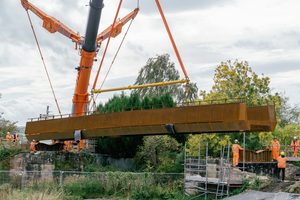
also includes a below ground pipeline along the Road C74. In addition, a pipeline gantry across the
River Wear using the former conveyor gantry bridge that previously linked the Eastgate Quarry with
the former Weardale Cement Works site is included in the application site and would connect the
areas north and south of the River Wear.
The former Eastgate Quarry lies some 800m to the south, the former Cambokeels Mine lies to the
north of the River Wear and the active Heights Quarry approximately 1km beyond. To the south of
the River Wear there are a number of residential properties located along the C74, including Ludwell
Farm and Billing Shield, and between the turn off for Stanhope at Hag Bridge and at
Westerhopeburn.
On the northern part of the application site there are several properties at Eastgate and the
Vicarage opposite the site entrance on the Road A689 and Rosewell further west along the A689.
The access to it lies within the North Pennines National Landscape (NL. The NL designation also lies
immediately to the north of the A689 and the site access. The remainder of the site is within an Area
of Higher Landscape Value (AHLV) as defined in the County Durham Plan.
The entire site is within the former medieval deer park of Stanhope Park which is identified in the
County Durham Local List of Historic Parks Gardens and Designed Landscapes. The former Works site
lies within a mineral safeguarding area for river sand and the River Wear is located nearby. Ludwell
Burn flows into the River Wear and is located immediately west of Ludwell Farm buildings. In the
wider locality there are several Sites of Special Scientific Interest (SSSI) and Special Areas of
Conservation (SAC) and one Special Protection Area (SPA).
The nearest SSSI is Westernhope Burn Wood which lies approximately 420 metres to the west of
the south western most extent of the application site and a further three SSSIs lie within 2km (Fairy
Holes Cave SSSI, Muggleswick, Stanhope & Edmundbyers Common and Blanchland Moor SSSI and
West Newlandside Meadows SSSI). The North Pennine Moors SPA and the North Pennine Moors SAC
and North Pennine Dales Meadows SAC lie within 2km of the application site.
Horsley Burn Wood Local Wildlife Site (LWS) is approximately 2km to the south east.
There is a Tree Preservation Order (TPO) on a group of three trees to the south of part of the site
referred to as Borehole 1 adjacent to the Road C74 to the west of Ludwell Farm. Around the
boundary of the property to the north of the Road A689 (The Vicarage) opposite the entrance to the
former cement Works is a group of twenty trees subject to a TPO.
There are no designated heritage assets within the site. The closest is the Ludwell farmstead
comprising three Grade II listed buildings: Ludwell Farmhouse; Barn Range South of Ludwell
Farmhouse, and Former House and Byre, with Loose Boxes, South of Ludwell Farmhouse Barn.
Planning permission was requested for the development of a pilot Lithium processing plant using
groundwater abstracted from existing ground water wells and associated infrastructure. It is
intended that this demonstration facility would be progressively developed from a research and
development continuous flow field trial, to pilot scale demonstration production. This follows
previous testing of the groundwater from the existing two boreholes which the application states
have confirmed that high levels of Lithium are present in the water.
The proposal would require an initial temporary field trials facility to test and refine Lithium
extraction methods followed by a pilot plant for a period of up to 15 years on land at the former
Works site. Also included in the proposal is the erection of small scale supporting infrastructure. The
permanent installation of below ground piping linking the two existing groundwater boreholes (to be
used potentially for reinjection) to an existing ‘gantry’ (to be upgraded) crossing the River Wear are
also proposed.
The application has been amended since original submission in response to consultation
responses and operational changes to the site layout. Changes made in September 2024 primarily
related to the layout and design of the proposed pilot plant and field trials buildings, replacement of
a direct outfall with a soakaway. Changes were also made to the structures proposed above the
existing borehole sites. No changes were made to the proposed pipeline routeing between these
locations and the main former cement works site. In addition, the time period for the duration of the
development was altered being reduced from a permanent permission to permission being sought
for 15 years for the pilot plant and retained field trials building and removal of buildings and
structures on the former Works site only.
In December 2024 it was confirmed that all above ground structures would be removed at the
end of the development. This would include the removal of all above ground level features at the
former cement works and borehole sites. The application for temporary development but with
permanent planning permission sought for the pipeline routes has been granted.
Below ground structures would remaining in place and would require further consent for any
future use. 18. The application identifies four constituent parts to the proposals. 1. The existing
groundwater abstraction wells (BH1 and BH2). 2. A new below and above ground pipeline corridor to
take water abstracted from the existing wells to the existing gantry over the River Wear. 3. A
pipeline gantry across the River Wear using the former conveyor gantry bridge that previously linked
the Eastgate Quarry with the former Weardale Cement Works site. 4. The construction of a pilot
Lithium processing plant on the former Weardale Cement Works site in two phases.
Existing groundwater abstraction wells 19. The two existing groundwater abstraction wells, south
of the River Wear (BH1 and BH2) were drilled approximately between 14 and 20 years ago at a
depth of 995m for BH1 and 420m for BH2, and do not have planning permission for the proposed
use.
It is proposed and accepted that the abstraction wells would be utilised to facilitate the
abstraction of Lithium and then their use would cease in line with the timescales for the removal of
the above ground structures (i.e. within 15 years of the commencement of use of the pilot plant).
No car parking was proposed on site, with the access being used for any ad hoc parking.
During the field trials phase there is the potential for the incidental treatment of water and
recovery of geothermal heat in that pipes carrying the naturally warm water would heat the
buildings within which they are located. The field trial processing facilities would be housed inside a
building (18m x 30m x 9.36m in height). Earth works would be undertaken to form the access track,
development platform and the water attenuation pond needed in this phase. Localised repair works
through the wider site (within the planning application boundary) would take place in order to get to
the development area. This phase would also include the formation of field trial building facility
incorporating a laboratory facility and site staff welfare facilities
The application states that the pilot plant would be used for at least 10 years after which point it
is anticipated that a much larger full Lithium processing facility would be needed using further land
within the former cement works site. However, at this stage planning permission is sought for a
temporary 15 year period after which any proposals for a permanent facility would be subject to
subsequent planning applications.
The pilot plant would house the Lithium extraction technologies that would be used to recover
Lithium and other elements from the ground water comprising sodium chloride (salt) which naturally
occur in the lithium brine and for which the applicant advises no special handling procedures are
required, and two additional buildings would be erected to accommodate this (30m x 30m x 15.36m
and 24m x 30m x 15.36m).
Waste water from the extraction of Lithium would require removal from the site. During the field
trials it is estimated that water abstraction from BH1 would typically be at a rate of 1m3 and 2m3
per hour. The pilot plant would have the capability to extract and process water at a rate of between
10m3 and 350m3 per hour. In the unlikely event that the 350m3 abstraction rate was used 24 hours
a day for 365 days a year, it would total just over 3 million cubic metres. All of which and any
processed brine would be removed from site via road tanker via the A689 with the water taken to a
licenced Northumbrian Water facility.
The estimated production figures for the field trials phase is 6 tonnes of Lithium Carbonate per
annum and 1,000 tonnes during the pilot plant phase. Working hours 41. Deliveries to and from the
site during the construction and operational phases, including the transportation of groundwater
and wastewater/excess groundwater from the site, would be undertaken between 08:00 and 18:00
hours Monday to Friday and 08:00 to 13:00 hours on Saturdays with no movements Sundays or Bank
and Public Holidays.
Once operational Lithium extraction would take place 24 hours per day 7 days a week with the
continuous pumping and processing of water and would include abstraction and any reinjection into
BH2. Staff would be present on site 24 hours per day 7 days a week, it is likely that the evening hours
would be monitored by a skeleton team with the majority of staff being on site during conventional
working hours.
Access to the former Works site would be via the existing access onto the Road A689. On the
former Works site all vehicles associated with the field trials and pilot plant phase, and construction
works, would enter and leave the existing access onto the A689 and turn east (right) or west (left)
out of the site.
Construction activities for both phases would take approximately 6 months each and it is
expected an average of 24 vehicles movements per week (12 in and 12 out) would be generated
Monday to Saturday with no working on Sundays, Bank and Public Holidays.
The field trials phase would require regular highways movements for staff, deliveries of materials,
the dispatch of concentrated Lithium brine and waste process water. These would require larger
road going vehicles including water tankers and delivery vehicles (e.g. HGVs and smaller vans).
During the field trials phase regular movements are anticipated to be an average of 24 per week (12
in 12 out), excluding staff journeys.
During the pilot plant phase daily vehicle movements would increase to an average of 148 per
week (74 in 74 out). Vehicle movements would take place Monday to Friday and Saturday mornings.
The boreholesites would both be accessed, during the construction and operational phases, from
the C74 to the south and turn east (left) out of the site. The C74 runs parallel to the site and leads
either east to Stanhope over Hag Bridge or west to Daddry Shield where it meets the A689.
Although an existing access point further west is also identified within the application, that
access is currently used by Northern Lithium who has planning permission for the continued
exploration to develop the abstraction and re-injection of groundwater for the extraction and
processing of Lithium at a pilot scale on land adjacent to the application site.
Construction activities at BH1 and BH2 are be expected to take approximately 16 weeks at each
site. Vehicle movements to and from these locations would be limited to the minimum required and
opportunities taken to combine movements where practicable, using the Eastgate site to
amalgamate loads. It is expected an average of 26 vehicle movements per week (13 in and 13 out)
would be generated. Once operational only maintenance and monitoring visits would be required
using cars and small-scale light good vehicles. Reinstatement
Planning permission has been agreed for 15 years for the proposed pilot Lithium processing plant
facility, after which time the buildings and all plant would be removed and the sites reinstated,
unless a subsequent planning permission was granted for continued development.
During the construction phase it is estimated that between 30 to 60 people would be employed at
the site. During the fields trials phase is estimated that 10 – 15 people in management,
administration, transportation, testing and maintenance roles would be employed increasing to 50
when the pilot plant is at full capacity. It is planned to ultimately be a 24 hour operation with the
number of jobs being created increasing as the shifts are added to reach that production level.