PCC Joy Allen explains, in her own words, why it is important that people are prepared for emergencies and how to become more informed and connected through the free community safety messaging service.
When Storm Arwen battered County Durham in 2021, thousands of households lost electricity, heating and communications. Some communities were left struggling for weeks.
But what stood out for me was the extraordinary way local people pulled together. Neighbours checked on neighbours. Volunteers delivered supplies. Community groups supported vulnerable residents, often going above and beyond to help complete strangers.
It reinforced something I have always believed: the greatest strength of our communities is the people who live and work in them. That’s why my vision as Police and Crime Commissioner is to work together to deliver safer, stronger and more resilient communities across County Durham and Darlington.
That commitment runs throughout my Police, Crime and Justice Plan. For me, resilience isn’t simply about preparing for storms, floods or power cuts. It’s about building connected, confident and empowered communities where people look out for one another, feel safe and have a genuine say in decisions affecting their neighbourhoods.
It’s about preventing crime, tackling anti-social behaviour, protecting vulnerable people and ensuring nobody feels forgotten or left behind. Because safer communities aren’t created by policing alone. They are built through strong relationships, shared responsibility and people working together.
Recent calls for greater national preparedness remind us that emergencies, extreme weather and disruption to essential services can affect any of us.
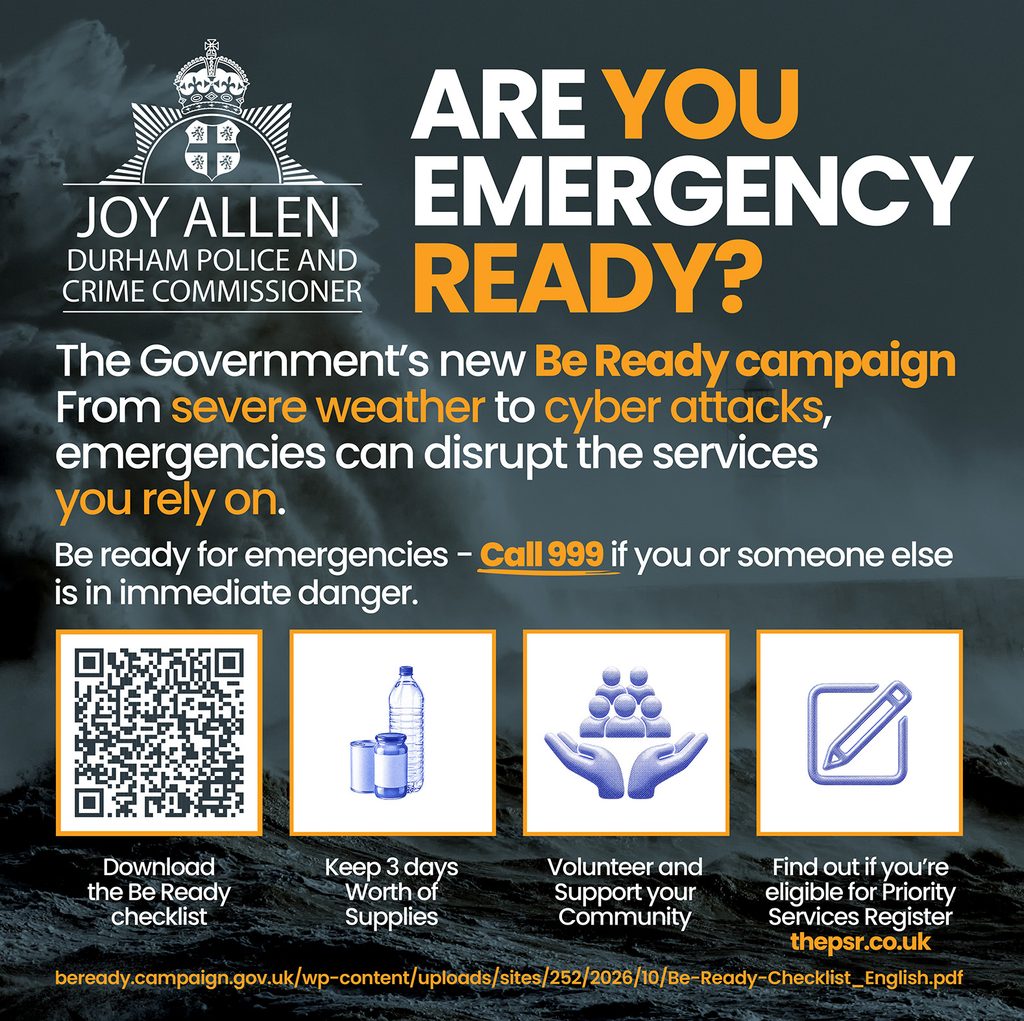
The Government’s emergency preparedness advice encourages everyone to take five practical steps:
- Prepare essential supplies: Keep three days’ worth of drinking water, non-perishable food and necessary medication, alongside a torch, batteries, first-aid supplies and a charged power bank.
- Plan for communication failures: Write down important telephone numbers, including 105 for power cuts. Consider a battery-powered or wind-up radio.
- Protect vulnerable households: Check eligibility for utility providers’ free Priority Services Registers, particularly where someone relies on electricity for medical equipment.
- Know your risks: Sign up for flood and severe weather warnings, check smoke alarms monthly and agree a household emergency plan.
- Look out for others: Exchange contact details with neighbours and consider who might need additional support.
These aren’t expensive or complicated measures. Small steps can make a big difference.
But community resilience must never become an excuse for public services to step back from their responsibilities. I expect the police, councils, emergency services and other organisations to work together, listen to residents and ensure support reaches those who need it most.
That’s why I’m encouraging everyone to join our growing community of residents signed up to Keep in the Know (www.keepintheknow.co.uk) our free community safety messaging service.
By signing up you can receive local crime alerts, safety advice and information to help you prevent crime, protect yourself and others and get the latest information from Report Fraud and Neighbourhood Watch,
The more informed and connected we are the better equipped we become to prevent crime, protect victims and deter offending. This is an ideal time to get to know your neighbours, share information and intelligence and get involved.
Together we can make the communities across County Durham and Darlington safer, stronger and more resilient!