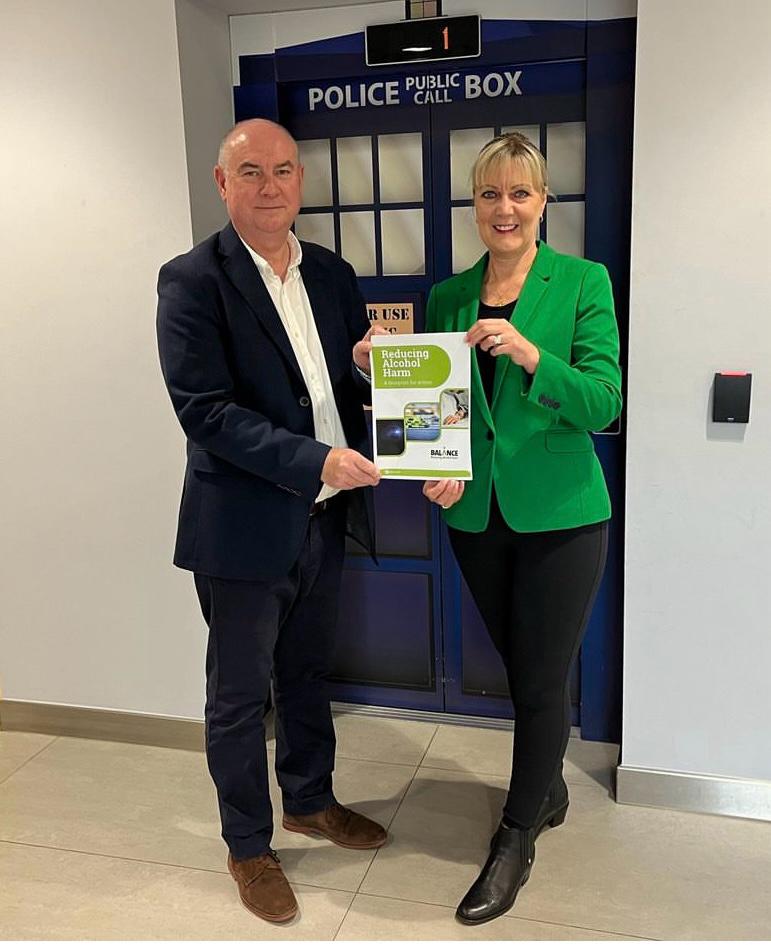
Police and Crime Commissioner Joy Allen today welcomed a new national report revealing overwhelming support from North East publicans for a stricter drink drive limit and stronger health policies to tackle alcohol harm.
The Behind the bar – What publicans really think about alcohol policy – report, published by the Institute of Alcohol Studies (IAS) and Balance, the North East’s alcohol programme, reveal compelling support for a Minimum Unit Price aimed at levelling the price gap between pub and cheap supermarket bought alcohol and addressing worrying levels of home drinking.
The research, involving 200 publicans across the UK including 70 from the North East, shows publicans widely support a public health approach to tackling alcohol misuse, with almost eight in ten from the North East agreeing that a Minimum Unit Pricing would cut deaths, support struggling pubs and free up revenue to invest in treatment and prevention.
The survey also highlighted support for other health policies aimed at tackling alcohol harm in communities with 75% of publicans supporting a lower drink drive limit including most rural publicans, and more than 50% backing health warning labels on bottles and cans.
Additionally, 46% of publicans support alcohol marketing rules being brought into line with those regulating junk food and 68% supporting more education and public awareness campaigns around alcohol.
The PCC, who is the Association of Police and Crime Commissioners’ (APCC) Joint National Lead on both the Addictions and Substance Misuse and Roads Policing portfolios, said: “I strongly welcome this report. It proves that the people who run our pubs and whose livelihoods depend on consumer demand are on the same page as those working hard to protect our communities from alcohol harm – and are supportive of tougher action.
“It also challenges the assumption that public health interventions are somehow automatically anti-pub or anti-hospitality and are not reflective of the interests of the industry as a whole.
“The North East has some of the worst rates of alcohol-harm in the UK, with around one million people drinking at levels which raise their risk of alcohol-related illness. Clearly, cheap shop-bought alcohol consumed at home is fuelling much of the harm alongside rapid online delivery platforms making alcohol instantly accessible to those who already have a problem.
“Responsible pubs are an important part of our communities and local economies, but they are operating in a very different environment from supermarkets and off-licences selling very cheap alcohol. That price disparity has implications not only for pubs, but for alcohol-related harm, demand on policing and other public services.
“The strength of support for a tougher drink drive limit and investment in treatment and public education counters many of the arguments made against the viability of stronger health measures. It also reinforces the need for the Government take a more balanced approach combining prevention, treatment and education alongside effective enforcement in future strategies.”
Alcohol harm is estimated to cost England around £27.44 billion annually through pressure on the NHS, crime and disorder and lost productivity through ill health and sickness.
Alcohol also a factor in 39% of all violent crimes in England and Wales
The PCC has prioritised tackling alcohol harm in her Police, Crime and Justice Plan and advocates a prevention-first approach, with clear commitments to focus on the drivers of offending and to develop criminal justice pathways relating to substance misuse, addictions and other issues to reduce the risk of relapse.
She has campaigned tirelessly to get more offenders into treatment and rehabilitation to tackle their addictions and break the cycle of offending and continues to lobby the Government, advertisers and regulatory authorities to work harder to challenge Britain’s wider drinking culture and address the risks of unhealthy drinking to help people live healthier and longer.
The full report is available here: https://www.ias.org.uk/report/behind-the-bar-what-publicans-really-think-about-alcohol-policy/.