Plans to supply the proposed holiday development at Hamsterley Forest with drinking water from a new borehole have still not been supported by site-specific drilling or pumping-test evidence, according to a technical briefing based on the public planning record.
Forestry England has told the office of local MP Dr Sam Rushworth that surveys indicate a “good borehole supply” in the proposed area and that the development would not affect the existing water system serving Hamsterley. However, the applicant’s own technical evidence states that the likely yield from the proposed borehole location cannot be established without drilling and pump testing. The development would be particularly dependent upon a secure water supply.
In addition to accommodation, the proposed lodges include hot tubs, creating a substantial and continuing demand for treated water throughout the operation of the holiday site. The applicant’s water-supply assessment estimates peak demand for the lodge development at approximately 57.4 cubic metres per day — around 57,000 litres — and recommends the drilling of a trial borehole followed by pumping tests to establish whether that level of abstraction could be sustained.
The Environment Agency has separately advised that further investigation is required, including consideration of existing water users and nearby springs. Abstraction above 20 cubic metres per day would also require an Environment Agency abstraction licence. Importantly, the Environment Agency has made clear that there is no guarantee that such a licence would be granted, even if groundwater is encountered.
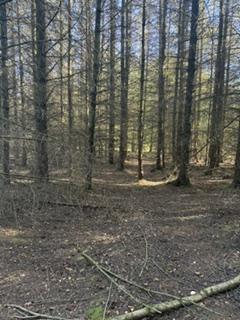
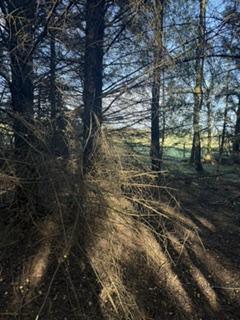
A field inspection of the proposed borehole location on 26 September 2026, almost 23 months after the planning application was validated, found no visible evidence of borehole drilling, pump-testing equipment, pipework, drilling spoil or a recent borehole construction compound. Durham County Council records also identify existing private spring supplies in the surrounding area. One nearby supply associated with High Redford is understood to be a surface-derived spring, serving local properties and Forestry England facilities. The briefing stresses that an existing spring supply is not evidence of the sustainable yield of a new production borehole and does not demonstrate that the proposed development can reliably obtain the substantially larger volume of water it requires.
The issue is particularly important because the proposed development is, by its nature, water-dependent. Lodge occupation, hot tubs, visitor facilities and associated services would all depend upon a reliable year-round potable-water supply. The central planning question is therefore not whether groundwater might ultimately be found. It is whether the evidence presently before Durham County Council demonstrates that a tested, sustainable and licensable water supply is available for the development being proposed.
The objection does not claim that a viable borehole can never be developed. It argues that, at present, the public planning record does not demonstrate that one has been drilled, tested or licensed.
Following Forestry England’s assurances, Dr Sam Rushworth MP has asked Forestry England to substantiate its statement that there is a “good borehole supply” and its assurance that abstraction would not adversely affect existing nearby water supplies, including private springs serving local households.
Those assurances are potentially significant because several properties in and around the forest rely upon private spring water rather than mains supply. Forestry England and the applicant are therefore being asked to provide the technical basis for those statements, including whether a groundwater investigation consent has been obtained, whether a borehole has actually been drilled, what pumping-test results are available, what assessment has been undertaken of neighbouring private springs, and whether an abstraction licence application has been submitted or granted. Until that evidence is available, the briefing concludes that the proposed water supply remains a feasibility proposal rather than a demonstrated operational water source.