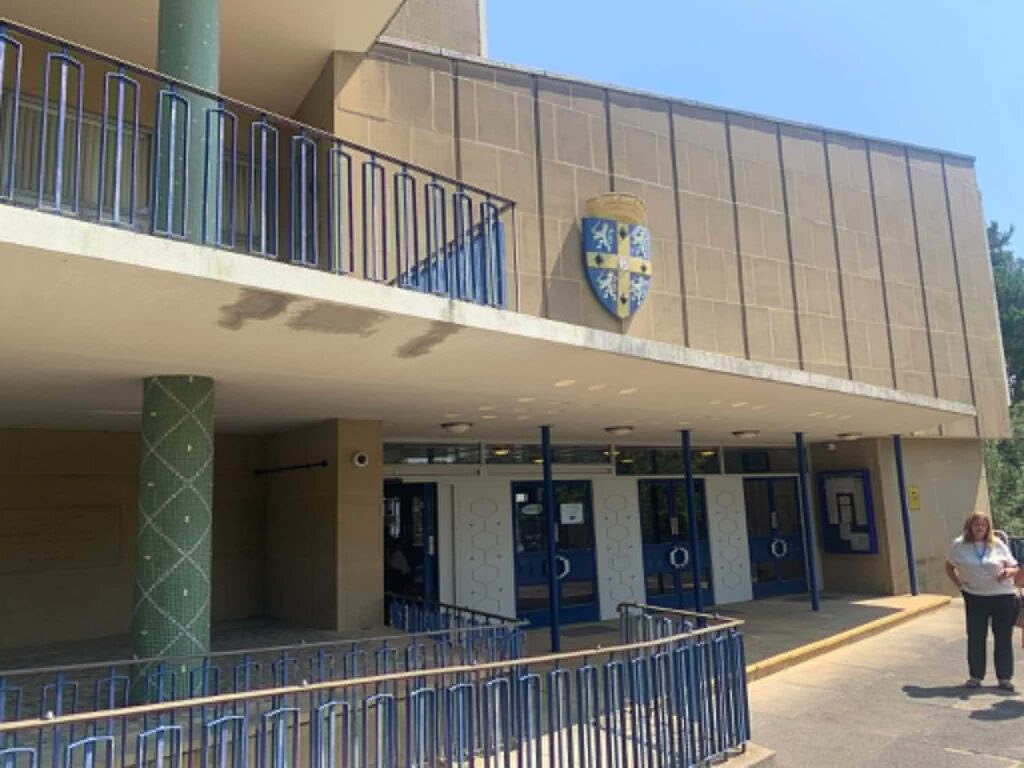
ON Friday gone, I made a final visit to County Hall in Durham, the HQ of Durham County Council for over 60 years, before its demolition begins.
I have many personal memories of the building over many years, not least after I passed my driving test and had to travel there to buy my Tax Disc. Yes, the County Council was once responsible for that. Over the past 30 years or so I have attended there for various reasons. As early as the 1970s, when I was on the payroll of DCC through my occupation as a Fire Control Operator, I have visited when I first started to research my family tree and often visited the archives office.
Into the 1990s, my attendances became more regular with my work as the first female Chairman of the Valuation Tribunal, hearing appeals against Council Tax and Non Domestic Rates. My role on the Education Admission and Exclusion Appeals Committee also saw me attend meetings in offices on various floors of the eight-storey building and then the visits became more regular into the Millenium when I was a member of the Overview and Scrutiny committee as a Parent Governor Representative, discussing the county’s education provision.
Finally, of course, I was invited as a journalist when Editor of the Weardale Gazette. I know the building well – I’ve had meals in the restaurant, visited the radio studio to be interviewed and enjoyed the hospitality of the Members Room. After the death of HM Queen Elizabeth The Queen Mother, I was given the opportunity to buy the large, signed portrait of her that had hung in the Durham Room.
Even as a little girl, I had an association with that building. One of my older sisters became a Civil Servant after leaving Wolsingham Grammar School and at first worked in Shire Hall – that stunning, red building that is now the Hotel Indigo in the heart of the city. When work was completed in the new County Hall in 1963, she transferred there as part of the Finance team. Tragically she died in 1968 but whenever I entered those doors into the building, I thought of her. And on that final day, she was constantly in my thoughts again.
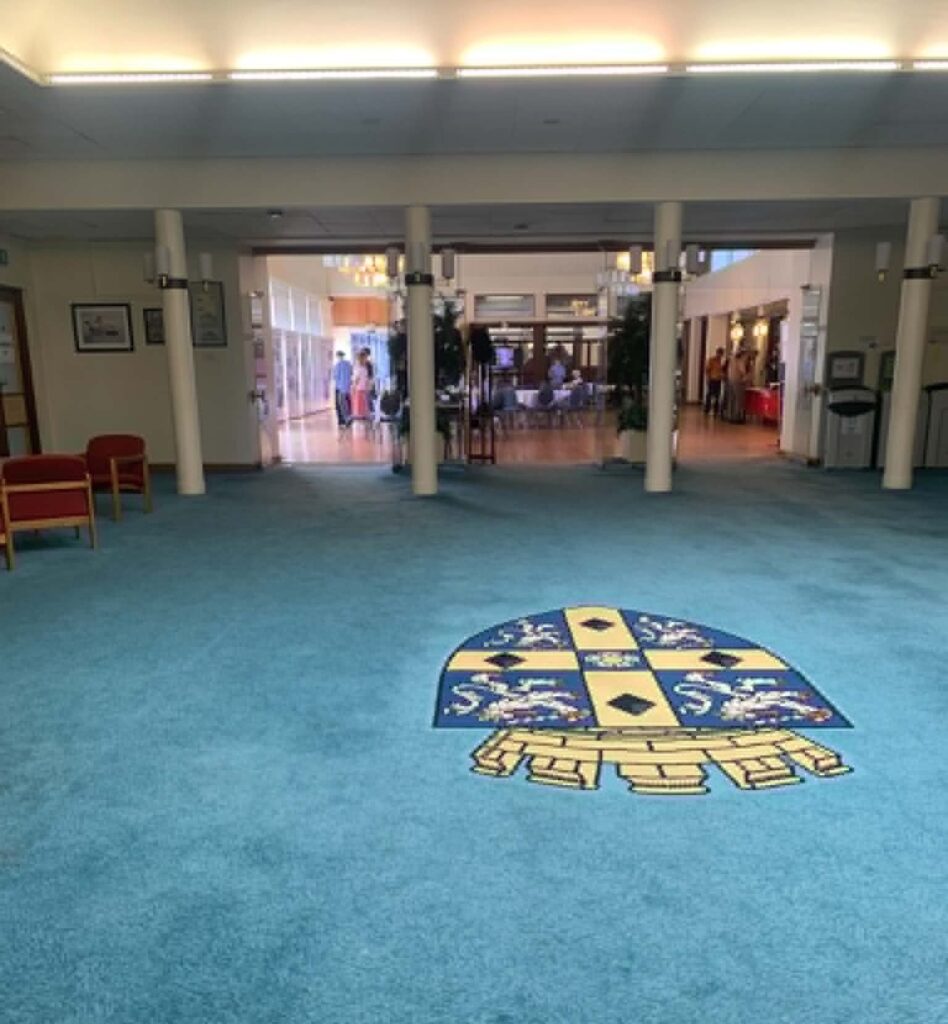
And so it was that I made my way there for one final visit – on the last day of its opening to the public. It was a poignant moment and very strange how folk become attached to buildings. As I walked through the door and saw a member of the Press team whom I know, I wondered how the staff were feeling about the imminent end of their workplace. Yes, it is most definitely past its sell-by date but it holds so many memories to so many people. Friendships have been made there, relationships too, some resulting in marriage. The decisions that have been discussed and passed that affected whole communities in the county – a much bigger county then when that building opened with it spanning the area from the Tyne to the Tees than it is now. The arguments, discussions, legislation – everything that a council must decide and act upon. This was the hub of the whole area that proudly calls itself Durham. THIS was an iconic moment in the county’s history and I felt the weight of it as I passed through and into reception. For once, no-one asked me to sign in … and off I strolled.
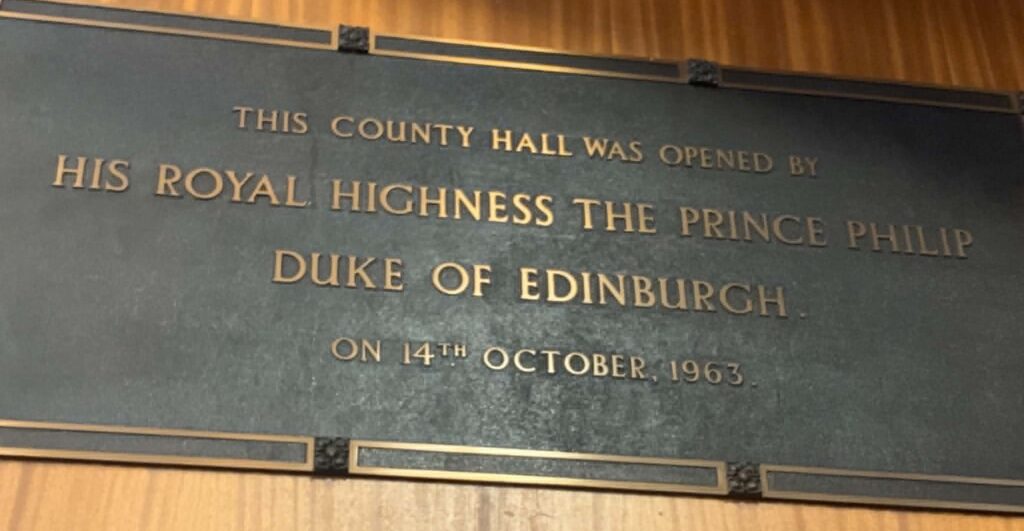
The Durham room was filled with information and memorabilia about the building’s history. A team from The Story Museum had a table full of old documents, photographs and suchlike. A video played in the background, showing old newsreel of the official opening by HRH Prince Philip, Duke of Edinburgh in October 1963. The Queen had been due to accompany him but unusually pulled out at the last minute.
The kitchen staff manned the free refreshments table while other staff members seemed to be going about like it was business as usual. The revered Council Chamber was open, showing a 40 minutes long film about the history of the building.
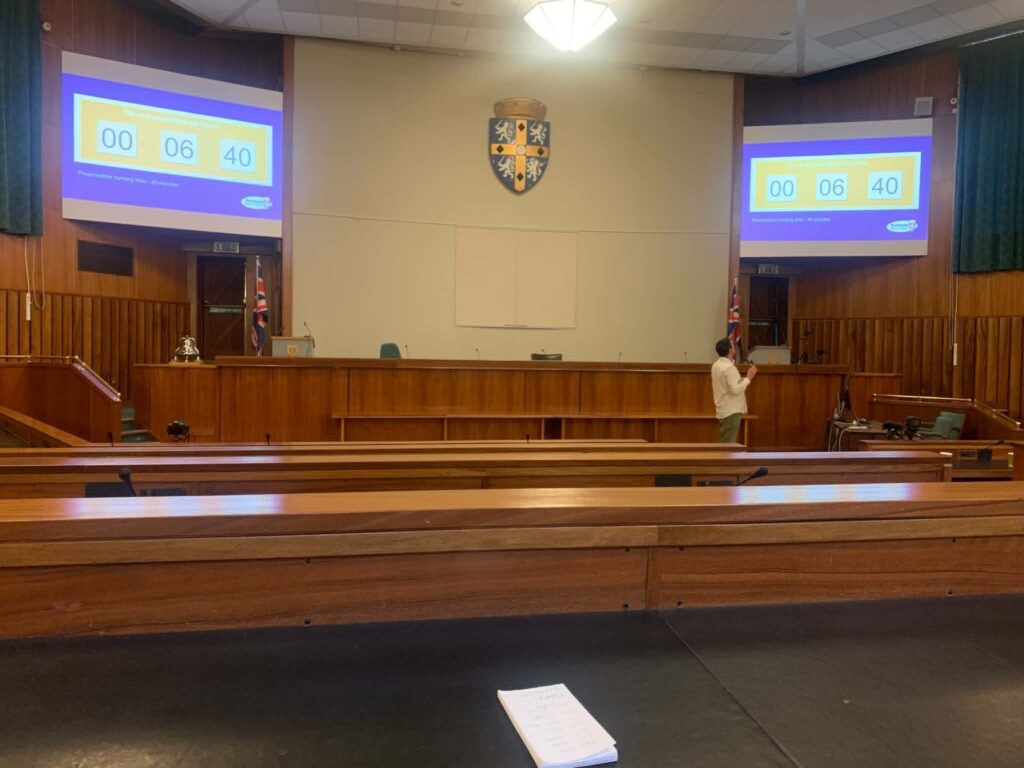
It was a real treat to sit in that room with its walnut-panelled walls, art deco light shades and brass handrails and wonder just how many momentous decisions had been made there over the years. The audience learned that the room is 70ft across and 28ft high with seats for 132 members and the 96 seats in the elevated public gallery.
The story began with Shire Hall and as the workforce outgrew that building, an area to the north of it was chosen as a ‘quiet place to conduct the business of county with a wonderful view of the Cathedral’. It was to be built in a ‘T’ shape on a hillock, which was later levelled. The land had to be drained because of something to do with rainwater that I didn’t quite understand but it resulted in the creation of two artificial ponds – one at the front of the building and one at the back, which attracted lots of flora, fauna and wildlife – and was also used by the Fire Brigade in an emergency for extra water. County Hall was built to accommodate 1,150 members of staff and at its height held 1800!
The foundation stone had been laid in 1960 and it took a further three years to complete the building. There were problems and questions – so many aspects to be discussed and agreed – or otherwise, including how the Durham Miners Association objected to the plans to heat the building using oil. The size of the car park, which originally catered for 332 vehicles but was later extended for 750 cars. Inside the building, we learned that the colour of your desk top defined your seniority – green for senior staff, blue for middle managers and so on. We saw vintage film of the strongrooms that used to house the enormous collection of archives looked after by the staff in the Durham Record Office. These, of course, were transferred to specialist storage and strongholds in The Story, including the DLI collection in 2024.
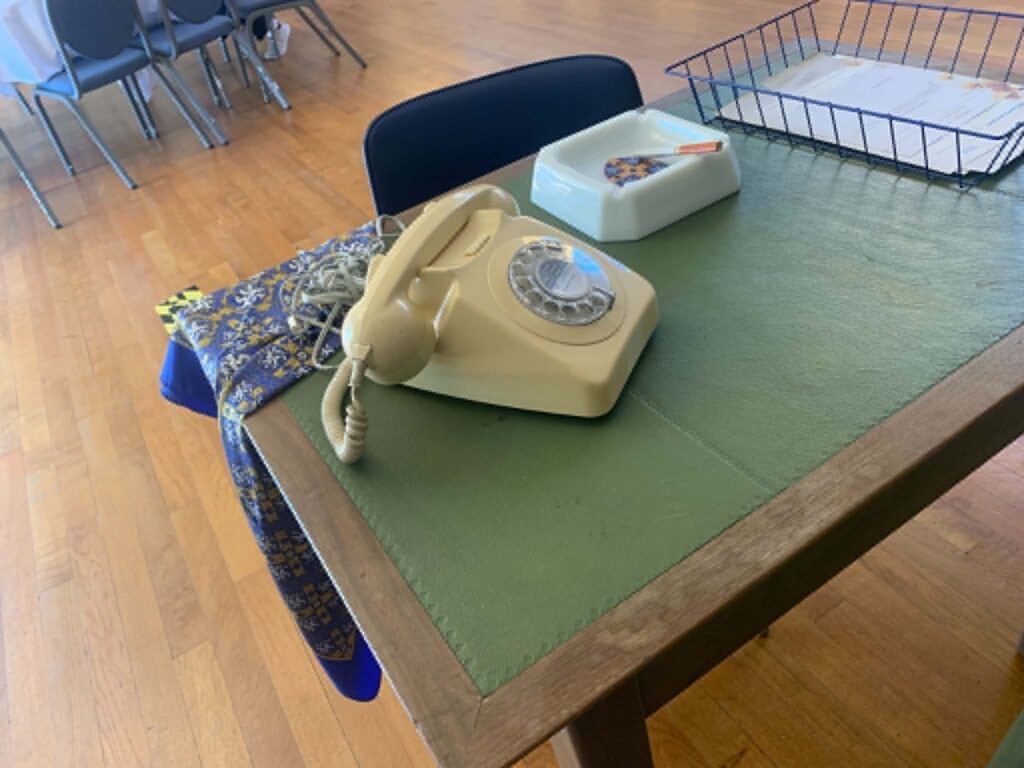
Staff and Councillors had a number of ‘extra perks’, which were part and parcel of everyday life, including a hairdresser and barber – who was rumoured to have worked previously in Harrods. They had access to a Co-op Bank, which was a permanent fixture in the building along with a radio station too. The building was licensed to sell alcohol and had a restaurant for staff and visitors. But there was also a myriad of rules and regulations, including a ban on stiletto heels, which could damage both wooden and carpeted floors as well as prohibiting certain items in offices – kettles, for example! Although ashtrays were provided because smoking was the norm at that time.
The very first computer was installed in 1962 and calculated the payroll, prepared cheques etc and was housed in its own room underground. The building has been used for many other events over the years, including part of the film set for Inspector George Gently and for the training of Police Sniffer dogs. The film gave information about Norman Cornish, the artist who painted the huge mural depicting Durham Big Meeting that was hung in the Durham Room and is now housed in Bishop Auckland Town Hall.
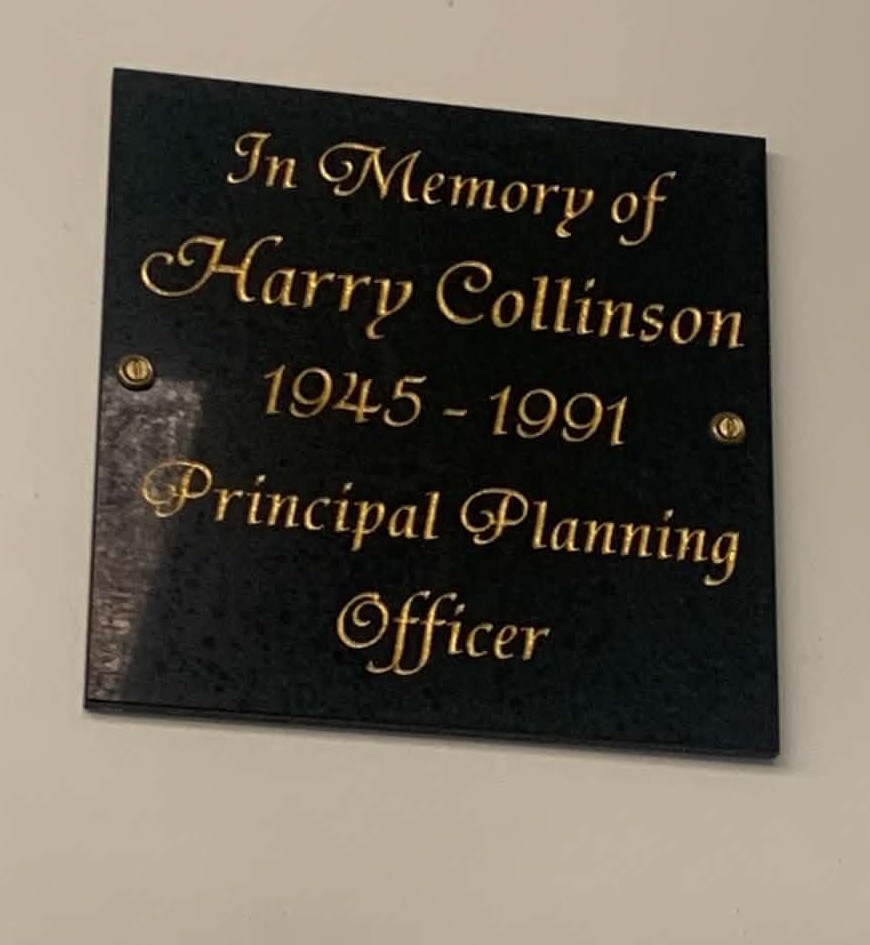
It included interviews with staff. Gwyneth shared her memories of 36 years as a cleaner – and she knows that building inside out, every nook and cranny. She had many a tale to tell, including Royal visits when the tight security personnel even checking inside her buckets! Angela, too, an Emergency Planning Officer, shared her memories. She had met her husband in their workplace and she recalled some of the events that stood out during her long career, including organising and sending volunteers to the Lockerbie disaster. She revealed that she has an emotional connection to the building where many relationships have been formed over the years, many friendships made and built.
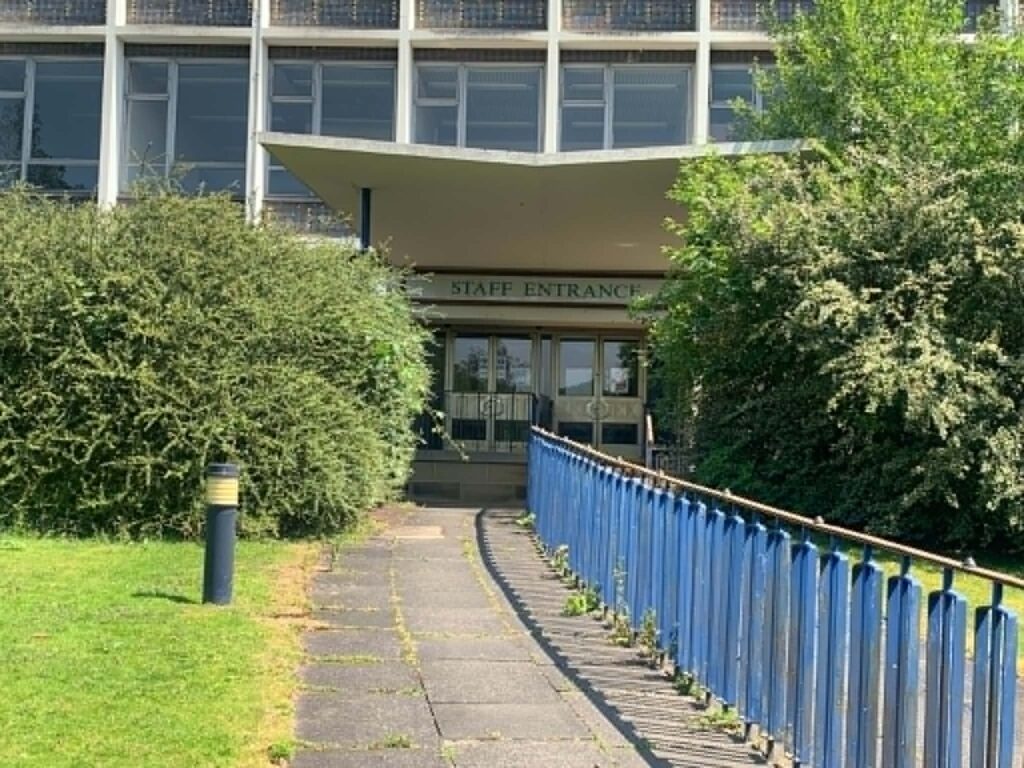
It was a well-organised and thought-provoking last visit offered to the county’s citizens and many took up the offer. I enjoyed it and felt quite melancholy as I left, walking past the near derelict ‘staff entrance’ and looking around at the now mature trees that have grown up around it, giving it the feel of a Sleeping Beauty story. The iconic building has seen better days, it’s given life to the business of county council but it has outgrown its usefulness and the final chapter has begun.
It’s replacement will be situated at the Rivergreen area of Aykley Heads and so, for only the second time in the history of Durham County Council, a new home is awaiting the hundreds of staff members. What will the future bring, I wonder?