Suspected burglars, shoplifters and dealers to be tested for Class A drugs to tackle repeat
offending
SUSPECTED burglars, shoplifters and drug dealers are to be routinely drug tested when they are
arrested in County Durham and Darlington.
Suspects taken into custody by Durham Constabulary will be tested to determine if they have
recently taken Class A drugs, including opiates, such as heroin or fentanyl, or cocaine. Those who
test positive will be referred to schemes where they can address their substance misuse and be
offered the expert help they need to get off drugs. Anyone refusing the mandatory test will be
charged with failure to provide a specimen, alongside any charges for the offence they were initially
arrested for.
Officers hope that the programme will help get people away from drugs, which will in turn improve
their life chances, reduce repeat offending and result in fewer victims of crime.
Sgt Stuart Simpson, of Durham Constabulary, said: “There is plenty of evidence that crime,
particularly acquisitive crime, is fuelled across our force area by the use of Class A drugs.
“Drug Test On Arrest helps us to identify those whose offending is being driven by drug use and
make sure they are offered the help they need.
“If we can change their behaviour then, in the long run, that will lead to lower crime and, more
importantly, fewer victims of crime.”
The £70,000 Drug Test On Arrest programme is a partnership between Durham Constabulary, the
Police and Crime Commissioner and third sector provider Cranstoun.
Across the UK, it is estimated that anywhere between one third and one half of all acquisitive crime
is connected to drug misuse.
Although the number of offences in County Durham and Darlington is falling, drug-related crime
still generates thousands of victims every year.
Police and Crime Commissioner Joy Allen said: “This is a positive step forward in addressing the
reasons why people offend to prevent the ‘revolving door’ of crime.
“The evidence is overwhelming; alcohol and drugs fuel a significant proportion of the crimes and
violence on our streets. To have any impact on this offending long-term, we must treat the problems
holistically and ensure that treatment and rehabilitation is available at the earliest opportunity for
those who need it most.
“Tackling alcohol and drug-related crime is a key theme in my new Police and Crime Plan and part
of my preventative approach to community safety. We need to help people who cannot help
themselves by increasing opportunities to divert and rehabilitate that strike at the roots of crime.
“Although these changes inevitably cost money, it is far cheaper to prevent crime before it
happens and avoids unnecessary trauma for victims.”
Under Drug Test On Arrest, detainees brought into custody at the new Investigative Hub near
Spennymoor will be tested for Class A drugs if they are suspected of having committed one of a
number of trigger offences, including burglary, robbery, shoplifting or drug supply offences.
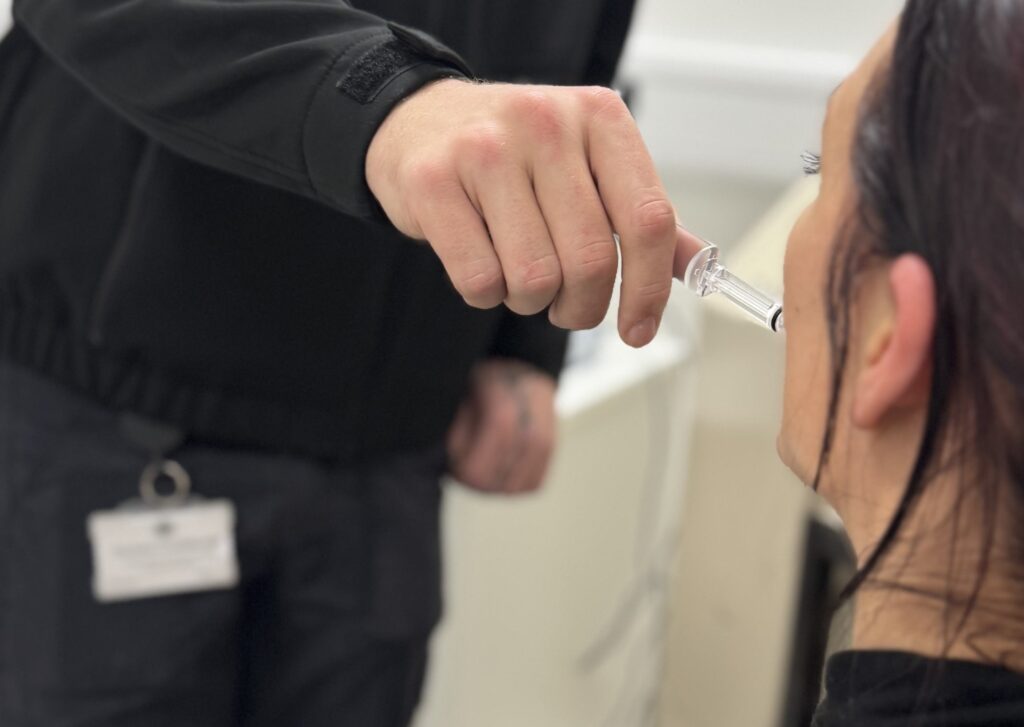
They will then be tested using a simple saliva swab, which can be analysed and give an accurate
result inside five minutes.
Anyone testing positive will be seen by an independent drug referral worker from the charity
Cranstoun, who will offer advice on safer use and, if appropriate, they will be referred on to
appropriate drug workers, typically getting an appointment within a week. Anyone refusing to
attend these follow-up assessments could face additional charges of breaching the terms of their
order.
Darren Nicholas, Assistant Director for Criminal Justice Services at Cranstoun said: “We know
how effective it is to provide interventions on-site in police custody in order to support people into
drug and alcohol treatment, and we have a strong track-record in providing these services.”
“By reaching people physically on-site, we’re able to address the causes of their offending and
break the cycle of substance related crime.”
“This work is supporting the police to prevent reoffending, reduce the harms caused by drugs, and
help people to make safer choices and live safer, healthy lives.”
The new Drug Test On Arrest service started in January with one Cranstoun arrest referral worker.
Cranstoun now have two workers on-site and are due to expand to a third worker in the coming
weeks, which will result in the Cranstoun service operating seven days a week over extended hours,
to provide the right interventions at the right time.
Although it remains far too early to assess the impact, initial activity during the first few weeks
has shown 59 individuals test positive with 34 people receiving an intervention, of which 21 were
referred to further treatment.