
There are two separate Lithium Mining companies in the upper Dale and one has recently submitted a planning application to Durham County Council, which is causing some distress among local people and regular visitors while others are in support.
Weardale Lithium, based in Durham but concentrating its efforts on the old Eastgate cement works site, has already secured planning permission from Durham County Council to build the UK’s largest lithium extraction facility there. This facility will produce battery-grade lithium carbonate from geothermal groundwaters with plans to scale to a commercial production target of minimum 10,000 tonnes per annum in the coming years.
The company says that the plant is a significant regeneration and redevelopment scheme. Utilising the brownfield site, the existing infrastructure and connectivity is well suited to bring the site back into sustainable use.
Northern Lithium Ltd, based in the Dales Centre, Stanhope has, in the last week or so, has now applied for planning permission too. The application is to gain permission to install abstraction boreholes, reinjection boreholes and a second lithium processing plant to enable lithium production for a period of 40 years, followed by decommissioning and restoration on land to the north-west of Ludwell, Eastgate.
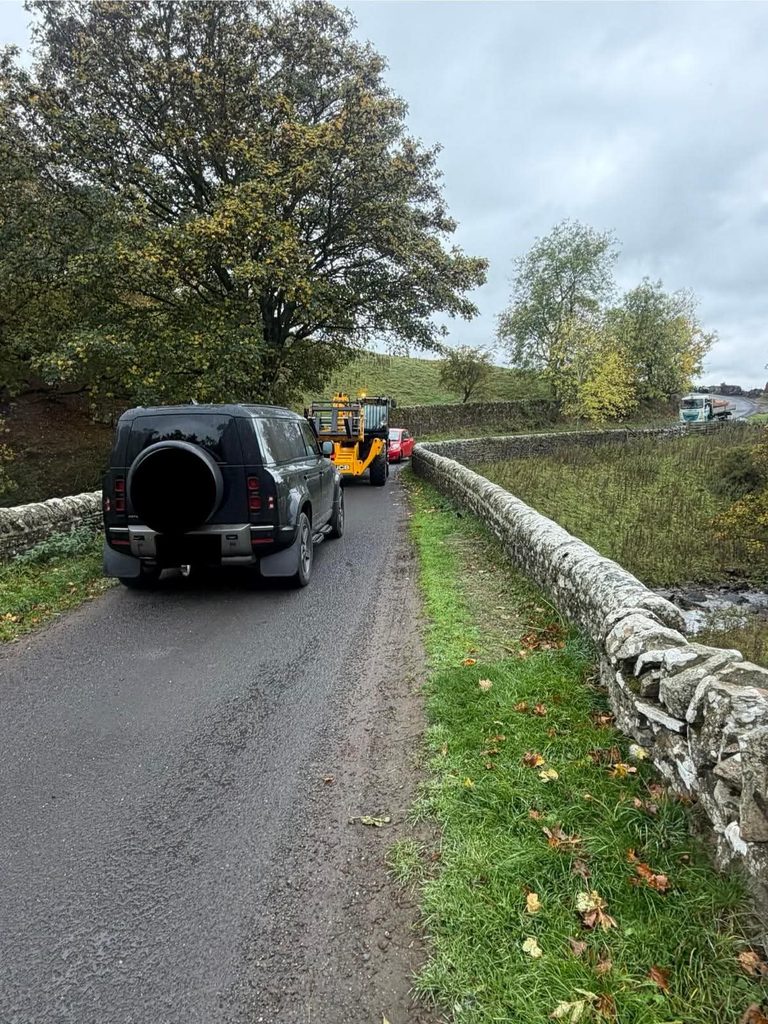
It is the building of the proposed large processing industrial plant along with the substantial increase in HGV, LGV and site traffic on the narrow road in that area of the Dale, that is bothering many people who live locally and visit the area regularly. The almost single laned C74 road with its blind corners, limited passing places and poor visibility even during the Summer months but much more hazardous in Winter.
One objector to the plans, a nearby resident of the proposed site, said that Weardale folk are confused by the fact that there are two companies interested in extracting lithium from Weardale. It is Northern Lithium that has submitted this planning application, which will be considered by Durham County Councillors next month.
A resident, who also lives near the application site, explained what they believe are the reasons for the confusion.
“Folk think that the plan is to build the plant on the brown belt old cement works site and don’t realise that this current application is to build a second plant but on agricultural land a little further west on the single tracked back road on the opposite side of the river to Eastgate. To build this plant, the company is suggesting it will take 20 months and planning documentation indicates that during this time, there will be 4,732 heavy goods and light goods vehicle movements involved.
“How will the infrastructure of the old stone bridges, piped becks beneath the road, the road itself not to mention the grass verges and dry stone walls, withstand this? What about the safety of other road users?”
The problem is also compounded when traditional farming involving leading of livestock from field to field. The C74 road is the alternative route to the A689 when diversions are in place.
Northern Lithium is a company less than ten years old and is described as a privately-owned innovative critical minerals development company, based in County Durham, focused on delivering a secure a UK/European domestic/regional supply of lithium for the electric vehicle and power storage industries, using sustainable extraction and production techniques.
In the planning application (DM/26/02338/MIN), its interest in Weardaleis described thus: ‘With up to 45 years’ exclusive development, appraisal and production rights covering mineral rights owned by the Church Commissioners for England, across circa. 240 sq kms (60,000 acres), of the North Pennine Orefield, Northern Lithium has secured one of the largest exclusive mineral leases currently in the UK.’
Northern Lithium Ltd has had a presence in the Dale, attending agricultural shows and also supporting local groups. It held a public consultation event in the Dales Centre, Stanhope and Eastgate Village Hall too, allowing Dalefolk to ask questions and have their say. Now the planning application has been submitted, both objectors and supporters can make submissions on line at the Durham County Council Planning Portal with the closing date for comments being November 7th.
The application already has a number of comments, mostly from objectors who are worried about the impact on the road network locally, including the following, which is typical and sums up the general feeling of those who reside and regularly visit in Upper Weardale:
Impact on rural character and tranquillity
The quiet lanes around Ludwell and Eastgate provide an opportunity to experience the countryside in a way that is increasingly difficult to find in more developed areas. For those of us who ride horses locally, the peaceful nature of the surroundings is an important part of the experience. A lithium processing facility operating for 40 years represents a substantial and long-term industrial presence. Depending on the final design and operational arrangements, buildings, machinery, vehicle movements, lighting and noise could alter the character of the surrounding landscape and reduce the sense of tranquillity currently enjoyed by people using nearby rural routes. I ask the Council to give careful consideration to the effect of the proposal on the rural setting and recreational enjoyment of the area. The landscape and visual impact assessment should be examined to ensure that it properly considers views from the local lanes and the experience of people travelling through the countryside on horseback, rather than focusing solely on residential properties or selected viewpoints.
Construction and operational traffic on narrow country lanes
The country lanes I regularly use around Ludwell and Eastgate are narrow and have limited passing places. These conditions make it important that any increase in traffic is carefully assessed, particularly where larger vehicles may need to pass horses or encounter other road users. I am concerned that construction traffic, deliveries and subsequent operational vehicle movements could affect the safety and enjoyment of these routes. Horses can be startled by unfamiliar vehicles, engine noise, reversing alarms and sudden movements. On narrow roads, riders may have limited opportunities to move aside safely or allow vehicles to pass at a suitable distance. I ask the Council to establish the proposed construction and operational traffic routes, expected vehicle numbers, vehicle sizes and anticipated hours of movement. The transport assessment should consider the suitability of the actual rural roads involved, including road width, visibility, passing opportunities and the interaction between industrial traffic, horse riders, cyclists, walkers and other road users. Any proposed traffic management measures should take account of horse riders and the particular constraints of narrow rural lanes. If the applicant cannot demonstrate that traffic can be accommodated safely without unacceptable effects on these roads, this should weigh in the planning decision.
Noise, lighting and disturbance
The introduction of industrial processing, drilling and associated activity has the potential to affect the peaceful character of the surrounding countryside. I ask the Council to scrutinise the evidence relating to construction noise, operational noise, vibration and lighting, including the likely hours and duration of activity. These impacts should be considered not only in relation to residential properties but also from the perspective of people using nearby rural lanes for recreation. The assessment should establish whether noise, lighting and other disturbances could materially affect the enjoyment of these routes. I also ask that any permission, if granted, includes appropriate and enforceable measures to control working hours, noise, unnecessary lighting and avoidable disturbance throughout the development’s lifetime.
Landscape and the surrounding countryside
I am concerned about the cumulative effect of a long-term industrial facility on the character of the countryside around Ludwell and Eastgate. Even where individual structures or operational activities are assessed as acceptable in isolation, their combined effect may alter the experience of the wider landscape. I ask the Council to examine the landscape and visual evidence carefully, including the scale and appearance of proposed buildings and infrastructure, the visibility of lighting and the effectiveness of any proposed landscaping or screening. The relationship with the nearby North Pennines National Landscape should also be considered in accordance with the relevant planning policies. Any assessment should recognise that the value of the countryside includes its recreational use and the experience of people who enjoy it on horseback, on foot and by bicycle.
The 40-year operating period and restoration
The proposed operating period of 40 years is a significant commitment for a rural location. The Council should consider the impacts over the full lifetime of the scheme, including construction, normal operation, maintenance, eventual decommissioning and restoration. I ask the Council to ensure that any mitigation relied upon by the applicant is practical, adequately secured and enforceable. The proposed restoration arrangements should also be examined to establish what will be restored, on what timescale and how the restored land will relate to the surrounding countryside. The eventual prospect of restoration should not be treated as removing the need to assess the landscape, traffic and recreational impacts that may arise over several decades.’
Natural England, a consultee, raised a concern regarding habitats and species. It’s statement to the planning application including the following|; ‘Despite the proximity of the application to European Sites, the consultation documents provided do not include information to demonstrate that the requirements of regulation 63 of the Conservation of Habitats and Species Regulations 2017 (as amended) have been considered by your authority, i.e. the consultation does not include a Habitats Regulations Assessment.
Natural England advised that there is currently not enough information provided in the application to determine whether the likelihood of significant effects to European Sites (Sites of Specific Scientific Interest) can be ruled out. It recommended that the authority obtains more information to help it undertake a Habitats Regulations Assessment:The 2026 breeding bird survey referred to in the Ecological Impact Assessment (SLR, 16 June 2026) should be published • The findings of the 2026 breeding bird survey should be considered in a Habitat Regulations Assessment.
A spokesman from Northern Lithium said, “Northern Lithium’s development will have minimal impact on local roads. The Local Highway Authority, as a statutory consultee to our application to increase the domestic supply of lithium, has stated that it raises no objection to our proposal as it is not considered that the development would have an unacceptable impact on highway safety or result in a severe residual cumulative impact on the local road network. Northern Lithium will continue to work with the planning authority and local community to minimise disruption and maximise the local benefits from our development.”
For more information go to the website at www.northernlithium.co.uk